Quiet Title Suit in California: A Complete Guide
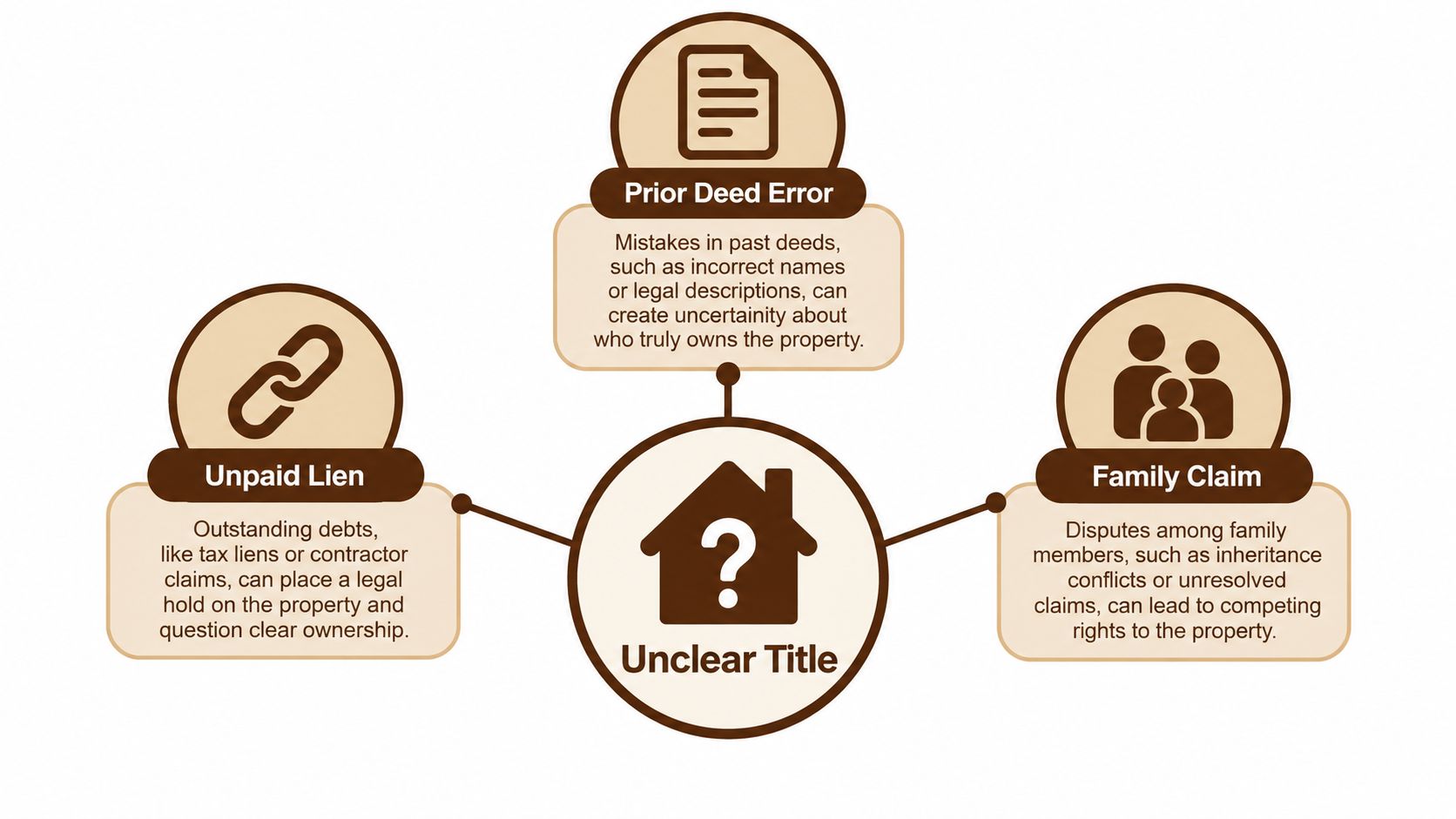
A quiet title suit is a court action that removes competing claims or clouds on property ownership, and in California it follows Code of Civil Procedure sections 760.010 through 765.060. It matters when a deed mistake, lien, or family claim makes it unclear who really owns the property.
A homeowner in Orange County or Los Angeles can run into this after a refinance review, a probate transfer, or a title company search. The record looks fine at first, then one old document or disputed claim blocks a sale, delays lending, or raises doubt inside a family. That kind of problem feels technical, but it can reach into everyday life fast, especially when a home is part of an estate or a long family history.
A quiet title suit is the legal tool courts use to clear that knot. Think of it as asking a judge to separate the valid ownership claim from the noise, so the title can be marketable again. In California, the statute is broad enough to cover ownership disputes, liens, and other clouds on title, not just fights between current owners California's quiet title procedural framework.
Families dealing with probate, inherited property, or boundary confusion often need the same remedy as investors do. The difference is in the facts, not the label. A quiet title suit can help when the actual issue is a cloud on title that should never have been there in the first place.
Practical rule: if the problem is a recorded defect or an apparent claim that shouldn't survive legal scrutiny, quiet title may fit. If the real dispute is about who inherited, who possessed, or who gets paid first, another procedure may fit better.
Table of Contents
- What Is a Quiet Title Suit and Why It Matters in California
- California Legal Basis for Quiet Title Actions
- Who Can File and What Must Be Proven
- Quiet Title Suit Versus Other Property Dispute Remedies
- California Procedure, Timelines, and Costs
- How Tanner Law Can Help Resolve Your Title Dispute
What Is a Quiet Title Suit and Why It Matters in California
A quiet title suit starts with a simple question that turns complicated fast, who has the legal right to the property. In California, the answer matters because title has to be clear enough for sale, refinancing, transfer, and probate administration. If a title report shows a prior deed error or a family member claiming an interest that was never resolved, the owner may need a court judgment to settle the record.
How the remedy works in plain language
The lawsuit asks the court to remove an adverse claim and declare the correct state of title. That can involve a lien that was never released, a deed that was mis-recorded, or an ownership claim that no longer belongs on the record. California's quiet title procedure is designed for real property interests, and it reaches beyond disputes between neighboring owners or buyers and sellers California quiet title statute summary.
For families, the practical value is often easier to understand than the legal label. A house passed through probate, but one heir says the deed was never fixed. Or an old lien shows up after years of quiet use. The court action exists to clean up that uncertainty before it becomes a bigger transaction problem.
A title dispute often looks small until someone tries to close escrow.
The phrase “quiet title” comes from the idea of quieting competing claims. The record stops arguing with itself, and one legally recognized ownership path remains. That is why this remedy shows up so often in California real estate work tied to inheritance, estate administration, and boundary uncertainty.
Why readers in Orange County and Los Angeles should care
Local families don't usually think about title until something blocks a sale or refinance. By then, the issue can already have spread across probate records, recorded deeds, and lender requirements. A quiet title suit gives the court a way to sort out the conflict and make the title usable again.
That's the core idea behind the rest of this guide, what California law requires, what evidence matters, and when a different legal route is smarter.
California Legal Basis for Quiet Title Actions
California quiet title practice rests on a statutory framework rather than general judicial discretion. Code of Civil Procedure sections 760.010 through 765.060 set out the procedure for an action involving title to real property or an interest in real property. The court can determine the parties' rights and address an adverse claim that makes ownership or use of the property uncertain California quiet title procedure and scope.
The remedy has older roots. English courts developed quiet title relief through equity, using it to remove a “cloud” on title when ordinary legal remedies did not adequately resolve the problem. California gives that traditional purpose a statutory structure suited to recorded deeds, liens, inheritance disputes, and other title defects historical background on quiet title relief.
Why California treats it as cumulative
Quiet title is a cumulative remedy. In plain language, a party may pursue it alongside another legal proceeding addressing the same property conflict, rather than choosing quiet title as the only possible theory. That distinction matters when a title issue overlaps with probate, partition, or a contract dispute cumulative remedy under California law.
For example, an heir may need a probate petition to address estate administration while also seeking a quiet title judgment concerning a deed or competing ownership claim. The two proceedings can serve different purposes. Probate handles the estate process, while quiet title asks the court to determine which property interest should prevail.
A technical defect and a genuine ownership dispute also call for different analysis. An incorrect legal description, an unreleased lien, or an outdated recorded claim may require title correction or another targeted remedy. A quiet title suit fits better when competing legal interests must be established and the adverse claim must be removed through a binding court judgment.
The practical takeaway is straightforward. California quiet title law gives a court a direct method to clarify title and extinguish competing claims when the facts support that relief. It does not replace every property remedy, and identifying the source of the problem should come before filing.
Who Can File and What Must Be Proven
A quiet title plaintiff has to show a real property interest that's being affected by an adverse claim. That can be an owner, an heir, a buyer in the chain of title, or another party whose interest is clouded by a recorded or apparent defect. The lawsuit is not about abstract fairness, it's about proving that the property record is wrong or incomplete in a way that matters legally.
The proof starts with the property itself
California quiet title claims usually turn on documentary evidence. Deeds, liens, boundary records, tax records, and chain-of-title documents are the core proof set because they show where the title came from and what now clouds it core evidentiary structure for quiet title claims. A complaint that says only “clear the title” won't carry the day if it doesn't identify the property, the title basis, and the adverse claim.
Plain-English rule: if you can't trace the title issue through recorded documents, you probably can't explain it clearly enough for court.
The evidentiary burden changes depending on what's being challenged. If the plaintiff is challenging someone who holds legal title, California generally requires clear and convincing evidence, which is a heavier standard than the ordinary civil standard. If the legal title itself is disputed and the court is deciding the factual issues underlying ownership, the usual preponderance of the evidence standard applies California burden of proof in quiet title cases.
Why that distinction matters
That difference sounds technical, but it shapes strategy. A family member asserting that a deed is invalid has a harder job if another party holds recorded legal title. By contrast, if the actual issue is whether a transfer ever happened or whether the recorded paperwork is incomplete, the court may treat the dispute as a factual ownership question.
Many people get confused. They think every title problem is the same. It isn't. A quiet title suit can work well for a recorded defect, but the plaintiff still has to prove the right kind of interest with the right kind of evidence. That's why legal review of the deed history matters before anyone files.
Quiet Title Suit Versus Other Property Dispute Remedies
A quiet title suit is often treated like a catch-all, but that's where people waste time. The core question is whether the problem is a technical title defect or a genuine ownership dispute. If the issue is a bad deed, an unreleased lien, or a cloud on title that shouldn't still be there, quiet title may be the right path. If the issue is who inherited the property, who has possession rights, or who should be paid first, another remedy may fit better quiet title as a distinct remedy, not a universal fix.

Common alternatives and when they fit
- Partition action: useful when co-owners agree the property is jointly owned but can't agree what to do with it.
- Probate proceedings: used when the underlying issue is inheritance, estate administration, or the transfer of a deceased person's property.
- Lien foreclosure or lien litigation: fits when the dispute is really about debt enforcement, priority, or whether a lien remains valid.
- Quiet title suit: best when the court needs to remove a cloud on title and declare what the record should show going forward.
A family home in probate is a good example. If the dispute is about whether the property belongs in the estate, probate law may come first. If everyone agrees on the estate, but an old recorded claim still blocks transfer, quiet title may be the cleaner tool. The same logic applies to divorce-related property transfers, forgotten deeds, and unresolved tax records.
Choosing the right pathway early
The wrong case theory can slow everything down. Filing quiet title when the true issue is ownership between heirs may create avoidable motion practice. Filing probate when the title defect is purely recorded and ministerial can be just as inefficient.
A good first step is to identify the exact problem before asking which lawsuit sounds familiar. That one decision often saves more time than any later correction.
California Procedure, Timelines, and Costs
California procedure starts with a verified complaint, which means the plaintiff signs under oath. The complaint has to include a property description, the basis of the plaintiff's title, the adverse claims being challenged, the date as of which title is to be determined, and a request for the court to decide title against those claims. A vague request to “clear title” is not enough under California procedure verified complaint requirements in California.
What the case usually looks like
- Complaint filing and verification. The court needs the property facts and the title theory, not a loose description of the problem.
- Service on defendants. Every claimant with a possible interest needs notice.
- Response or default. A defendant can answer, challenge the allegations, or do nothing.
- Discovery or settlement. The parties may exchange title documents, tax records, and chain-of-title evidence.
- Judgment. The court enters an order resolving the claim to title.
The practical timeline depends on service, how many claimants exist, and whether anyone fights the case. A clean case can move more quickly than a disputed family matter, but service on missing heirs or old lienholders can take longer. When a title issue touches probate or estate administration, the pace often depends on related court events too.
What drives expense
Costs usually rise with complexity. A case involving one outdated lien will generally be simpler than a case involving multiple heirs, disputed deeds, or competing claims across several recorded documents. Title reports, recorded-document pulls, and potential expert help can add expense, especially if the underlying facts are messy.
The earlier a title issue is identified, the more options usually remain available.
There's a second timing issue that matters in some cases brought against the United States. The federal Quiet Title Act has a 12-year limitations period, and a suit must be filed within 12 years of accrual, when the plaintiff or predecessor knew or should have known of the United States' claim federal Quiet Title Act limitations rule. That timing rule is jurisdictional in nature, so date-tracking the first notice of the adverse claim can be critical.
For most California homeowners, the practical message is simpler. Don't wait until a sale is pending or an estate transfer is urgent. The case is much easier to evaluate when the documents are still available and the chain of title is fresh.
How Tanner Law Can Help Resolve Your Title Dispute
Tanner Law works on California property disputes with the kind of practical focus these cases need. William T. Tanner has served clients since 1994 as both an attorney and licensed real estate broker, which helps when a title issue sits at the intersection of court procedure and property records. The firm handles quiet title matters, partition disputes, and related real estate conflicts from an Orange County base, with courtroom experience in OC, LA, Riverside, and Santa Barbara.

That dual perspective matters because a quiet title case is never just about the courtroom. It also turns on deeds, escrow history, recorded instruments, probate documents, and the way a title company reads the file. A lawyer who understands both litigation and real estate transactions can spot whether the issue needs a lawsuit, a probate fix, or a different recording strategy.
The firm also works with probate, estate planning, consumer debt, civil defense, small claims, and expungements, which helps when the title problem is only one part of a larger family or estate matter. That broader background is useful in Orange County and Los Angeles, where inherited property often overlaps with trust administration, sibling disputes, and long-running record problems. Direct attorney access and clear communication matter in those cases because owners need to know what the next filing changes.
If you're dealing with a clouded title, a disputed inheritance, or a property record that doesn't match reality, Tanner Law can review the documents and explain the next legal step in plain language. Schedule a free consultation with Tanner Law to discuss your California quiet title issue, whether the concern involves probate, a deed error, or another ownership dispute.