Real Estate Contract Length: Your 2026 Guide
If you're handling a home sale in Orange County or Los Angeles after a death in the family, a trust transition, or a co-owner dispute, the phrase real estate contract length can become surprisingly slippery. One document says the broker will represent the estate for months. Another says the buyer plans to close in a matter of weeks. Then the escrow officer starts talking about contingency removals, extensions, and deadlines that can trigger default if no one acts in writing.
That confusion is normal. In California, "contract length" rarely refers to one single timeline. It usually means several overlapping clocks running at once, and each one carries different legal consequences. Executors, trustees, and heirs often focus on the wrong deadline first. That's how preventable disputes start.
Table of Contents
- What "Real Estate Contract Length" Really Means in California
- Listing Agreements vs Purchase Contracts The Two Core Timelines
- Beyond the Basics Key Time-Based Clauses in California Contracts
- A Snapshot of Typical Contract Lengths in California
- How to Strategically Negotiate Your Contract Length
- Common Pitfalls and Deadlines to Enforce Your Rights
- When to Consult a Real Estate Attorney in Orange County
What "Real Estate Contract Length" Really Means in California
An executor in Orange County might inherit a straightforward-looking task: sell the house, distribute the proceeds, and move the estate forward. Then the paperwork arrives. There's a listing agreement with a broker, an eventual purchase contract with a buyer, disclosure deadlines, repair discussions, and extension requests that may or may not be enforceable unless everyone signs.
That is why real estate contract length needs to be unpacked before anyone signs anything.
A common source of trouble is mixing up the broker's marketing term with the buyer's closing timeline. As Zillow's discussion of agent contracts notes, listing agreements typically last 3 months in major markets, while purchase contract timelines average 30 to 45 days from offer acceptance to close in standard California transactions. The same source also states that 22% of disputes involve contract length extensions, which is especially important in probate and non-arm's-length transactions.
Practical rule: If you can't identify which document controls which deadline, you're not ready to approve an extension.
Three different timing issues usually matter most:
- Broker representation period: This is the listing term. It governs how long a real estate broker has the right to market the property.
- Sale transaction period: This begins once buyer and seller form a purchase contract and move toward closing.
- Internal contract deadlines: These are the smaller trigger dates inside the deal, such as contingency periods, response dates, and closing-related performance obligations.
California law makes this more important, not less. Probate sales, trust sales, partition cases, and inherited-property disputes often involve multiple decision-makers. One heir thinks the listing expired. Another assumes escrow can "roll over" a deadline. The agent points to a protection clause. The buyer asks for more time. Those are not minor details. They affect commission exposure, negotiating advantage, and in some cases whether the property can be sold cleanly at all.
Listing Agreements vs Purchase Contracts The Two Core Timelines
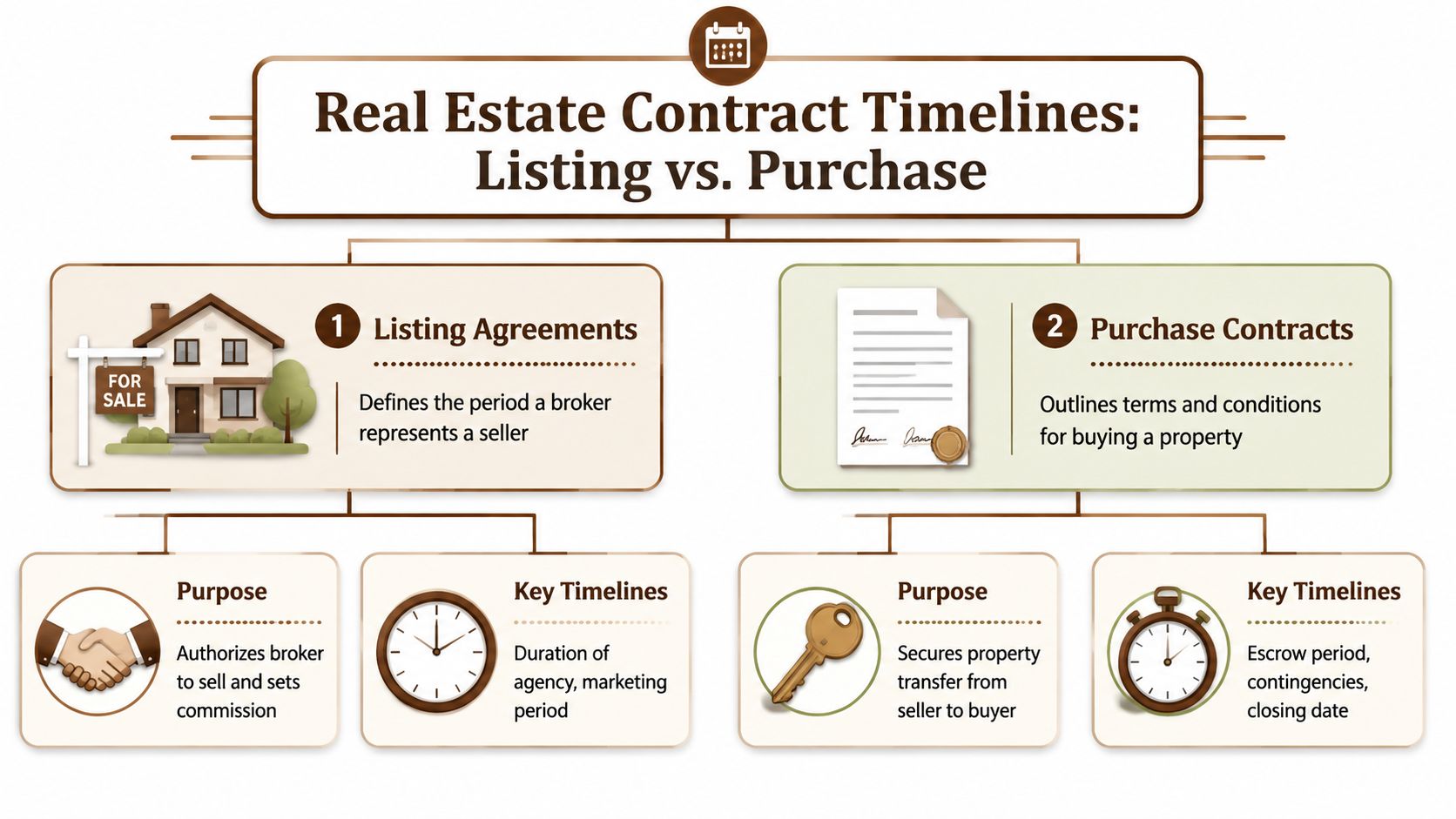
People often use these terms as if they mean the same thing. They don't. In California practice, they serve different functions, bind different relationships, and create different risks.
Listing agreements
A listing agreement authorizes a broker to represent the seller. It covers the marketing period, commission terms, and the scope of the broker's authority. In probate and trust matters, this is often the first document signed, and it deserves more scrutiny than it usually gets.
In California, Greiner Law's discussion of real estate agent contracts states that exclusive listing agreements typically span 3 to 6 months. That same source notes that the standard CAR Form LR includes protection period clauses that can keep a seller exposed to commission claims even after the formal expiration date. It also explains that breaching these agreements can lead to liquidated damages, and that counsel can negotiate activity milestones to reduce that risk.
That last point matters in Orange County and Los Angeles. A long listing term isn't automatically bad. It can make sense for a unique house, a luxury property, or a sale tied to probate approval, occupancy problems, or title cleanup. But a long term without performance standards often works poorly for estates because the fiduciary is accountable to beneficiaries, not to the broker's calendar.
A listing agreement should be read as a business contract, not a routine intake form. Focus on:
- The exact start and end dates: Not "about six months." The written dates control.
- Any protection period language: This can preserve commission rights after expiration for specified buyers or prospects.
- Cancellation terms: Some agreements are harder to end than sellers expect.
- Performance expectations: Showings, marketing actions, pricing reviews, and communication frequency should be concrete.
Purchase contracts
A purchase contract is the deal to transfer the property itself. Once buyer and seller agree, the parties shift from marketing to performance. That means escrow, disclosures, contingency management, title work, and closing obligations.
The purchase contract is usually much shorter in duration than the listing agreement. It is also much more deadline-sensitive. Missing one date can change the balance of power quickly. A buyer may lose a contingency. A seller may lose the right to cancel. An estate representative may discover that a delay affects court timing, beneficiary distributions, or property carrying costs.
A short escrow doesn't mean a simple transaction. In probate and inherited-property sales, the legal issues often sit behind the calendar rather than on the front page of the contract.
The practical difference is this:
| Agreement | Main purpose | Usual function in the transaction |
|---|---|---|
| Listing agreement | Hires the broker | Creates the marketing relationship |
| Purchase contract | Binds buyer and seller | Governs the sale, escrow, and closing |
When clients confuse these two documents, they negotiate the wrong points. They push hard on sale price but ignore an unfavorable protection period. Or they celebrate that the listing is ending soon while forgetting the purchase contract still requires written extensions, disclosure compliance, and timely responses during escrow.
Beyond the Basics Key Time-Based Clauses in California Contracts
A California real estate deal isn't controlled only by the contract's start date and end date. The most expensive problems often come from smaller time-based clauses inside the documents.
Buyer representation can outlast one property search
There is another contract many sellers and families overlook because it sits on the buyer's side. A buyer may be working under a separate broker representation agreement that affects how quickly that buyer can pivot, negotiate, or step away.
According to FastExpert's explanation of buyer's house search agreements, buyer's broker agreements typically last 90 days, and that timeframe is designed to align with a 45 to 60 day home search period while leaving room for negotiation. The same source notes that attorneys may recommend extended terms up to 180 days when probate litigation or title issues complicate the search.
That matters because not every delay comes from your side of the transaction. Sometimes the buyer's representation structure influences how fast offers are prepared, revised, or pursued.
The purchase agreement is full of smaller deadlines
Inside the purchase contract, California parties usually deal with a chain of shorter performance periods. These often include inspections, appraisal-related decisions, financing follow-up, title review, disclosures, and the closing date itself. The labels vary by form and transaction, but the legal point stays the same: these aren't casual target dates.
For estate representatives, several practical rules help:
- Treat contingencies as live rights, not boilerplate. They let parties investigate and decide whether to proceed, renegotiate, or cancel under the contract's written terms.
- Use written amendments for deadline changes. Verbal understandings create unnecessary risk, especially when multiple heirs or fiduciaries are involved.
- Track escrow as a sequence. Opening escrow, delivering disclosures, resolving title questions, signing final papers, and closing are connected. Delay in one area usually spills into the next.
- Expect title and probate issues to stretch decision-making. A property that looks market-ready can still carry legal problems that slow everything down.
Buyers often focus on the closing date. Sellers in probate should focus on every date that can move the closing date.
In California, that distinction is essential. A clean conventional sale may move quickly. A trust administration sale with occupancy issues, uncertain authority, or a family disagreement usually won't. The contract should match the legal reality of the property. If it doesn't, the timeline becomes a source of conflict instead of a tool for closing.
A Snapshot of Typical Contract Lengths in California
Many clients need one page they can scan before they sign. The chart below isn't a substitute for legal advice, but it does help separate the major timelines that get lumped together under the phrase real estate contract length.
Quick reference table
| Contract or Clause Type | Typical Duration | Key Consideration |
|---|---|---|
| Seller listing agreement | Typically 3 to 6 months in California practice | Review protection periods, cancellation rights, and whether the term fits the property's marketability |
| National average standard listing contract | Six months | A national benchmark may be too long or too short for a probate, trust, or partition sale |
| Buyer purchase contract to closing | Often 30 to 45 days in a standard California transaction | Closing speed depends on title condition, disclosures, and whether extensions are documented properly |
| Buyer's broker agreement | Typically 90 days | The buyer's representation timeline may affect negotiation pace and commitment |
| Extended buyer representation in complex matters | Up to 180 days | Longer terms can make sense when probate litigation or title disputes are involved |
| Shortened contract timelines in sight-unseen transactions | 15 to 21 days in the cited 2025 California trend | Faster isn't safer if inspections and other protections are reduced or waived |
| Short listing terms in fast-moving markets | Sometimes 30 to 60 days | A shorter marketing window can work when inventory is tight, but only if the broker can execute immediately |
| Longer listing terms in slower or specialized markets | Sometimes 9 to 12 months | These terms may be appropriate for unusual properties or difficult sale conditions |
A table like this is useful for one reason above all: it stops people from assuming that every date in the transaction should move together. They don't. A listing term can expire while a commission protection period remains alive. A purchase contract can be in escrow while title issues force amendments. A buyer can be locked into a broker agreement longer than the seller expected.
How to Strategically Negotiate Your Contract Length
Most bad timing terms aren't imposed by law. They're accepted because the parties treat the first draft as fixed. That's a mistake. In California real estate practice, contract length is negotiable, and the right duration depends on the asset, the market, and the legal complexity behind the sale.
When shorter terms help
A shorter listing term often works well when the property is conventional, well-located, and likely to attract immediate interest. It can also make sense when an executor or trustee wants the ability to replace an underperforming broker without fighting over termination language.
That doesn't mean every short contract is smart. The key is pairing a shorter term with clear expectations. If the broker has little time, the seller should expect immediate photography, MLS launch discipline, prompt open-house planning, and regular communication.
The same logic applies inside the sale transaction. The BiggerPockets discussion cited in the provided data states that 28% of California transactions in Q1 2025 were sight-unseen, and that these deals are compressing timelines to 15 to 21 days. It also states that post-close disputes increased by 30% in counties like Orange as buyers waived inspections.
That trend creates an opening and a warning. A seller may welcome a fast offer, especially when the estate wants to reduce carrying costs or conclude administration. But when a buyer shortens the deal by giving up information-gathering steps, the risk often shifts downstream into dispute.
When longer terms are safer
Longer contract periods can be the better choice when the property isn't transaction-ready on day one. Common examples include inherited homes with deferred maintenance, unresolved title issues, uncertain occupancy, family disagreement over sale strategy, or a pending probate step that affects authority to close.
In those situations, longer terms work only if they're structured well. I usually tell clients to negotiate the term together with the escape route.
Consider asking for:
- A cancellation clause: This gives the seller a practical way to end an unproductive relationship.
- Performance milestones: Tie the broker's continued protection to measurable activity such as marketing actions or showing volume.
- Written extension standards: Require all timeline changes to be signed clearly and attached to the deal file.
- Named-buyer protection language: Keep post-expiration commission claims narrow rather than open-ended.
The best contract length isn't the shortest or the longest one. It's the one that matches the legal condition of the property and gives the client a clean exit if performance falls short.
For Orange County and Los Angeles sellers, that approach usually works better than arguing over duration in the abstract. Negotiate the timeline, but also negotiate what must happen during that timeline.
Common Pitfalls and Deadlines to Enforce Your Rights
Most timeline disputes don't begin with dramatic misconduct. They begin with assumptions. Someone assumes the contract expired cleanly. Someone assumes an email extension was enough. Someone assumes a rushed buyer won't complain later because the deal closed.
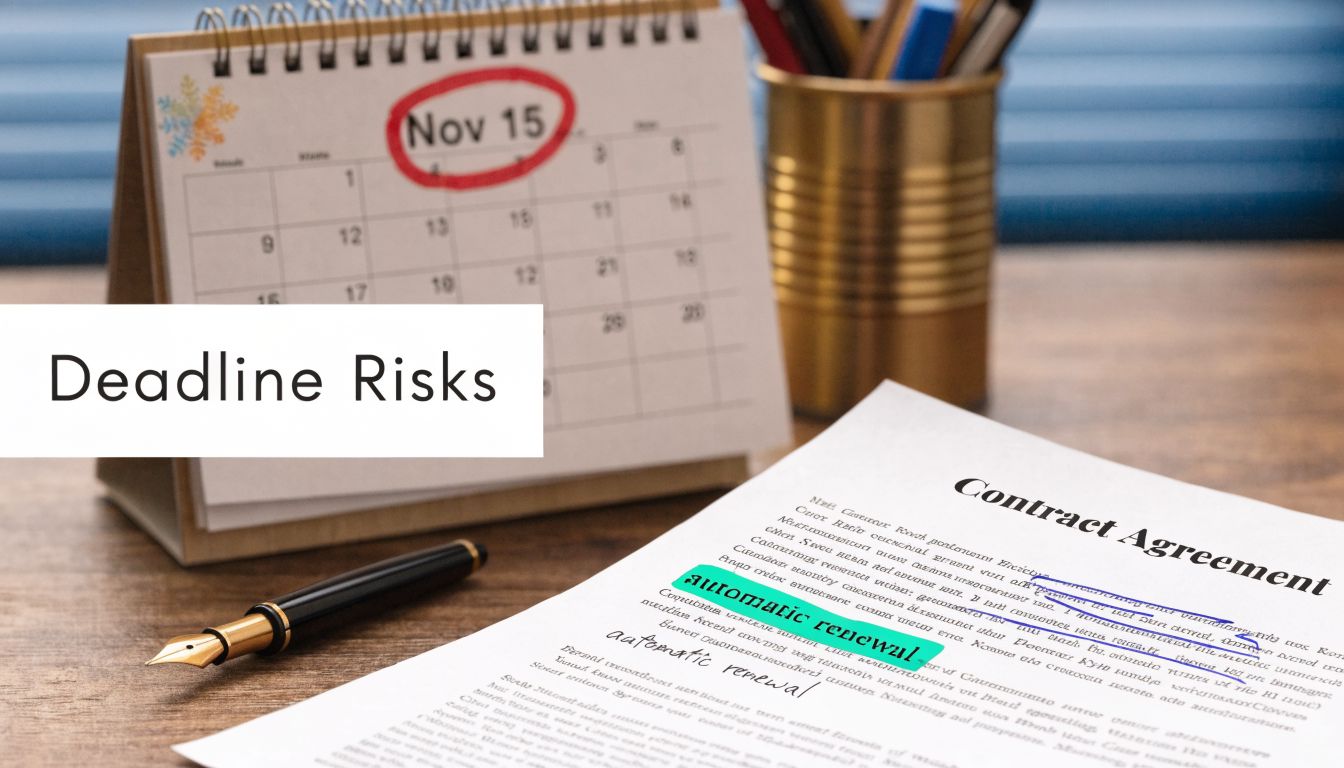
The national benchmark for a standard listing contract is six months, according to Vocal's discussion of realtor contract length. That same source explains that sellers in dynamic markets such as Orange County can negotiate cancellation clauses or performance milestones, such as a required number of showings per month, to avoid getting trapped in an underperforming agreement.
The mistakes that cause the most trouble
Some problems appear repeatedly in California real estate disputes:
- Ignoring protection periods: Sellers think the listing ended, but the broker still claims commission rights based on a protected buyer.
- Using verbal extensions: Real estate timing changes should be documented in signed writing. Oral side deals are hard to enforce and easy to dispute.
- Waiving investigation too early: A compressed deal can look efficient until a defect appears after closing.
- Letting the wrong person sign: In probate, trust, and co-owned property matters, authority has to be clear. A deadline extension signed by the wrong person can create a second dispute on top of the first.
- Treating the closing date as the only important date: The internal deadlines often determine whether the parties still possess bargaining power when closing gets delayed.
A short video overview can help frame how these disputes develop in practice:
Why written enforcement deadlines matter
Even after a transaction collapses or closes badly, timing still matters. California law imposes deadlines to bring claims for breach of written contracts. That means a party who waits too long can lose the ability to enforce rights at all, even if the underlying complaint is strong.
In practice, that issue often arises after the family believes the property problem is over. Months later, a commission dispute surfaces. Or a co-owner claims the sale extension was unauthorized. Or a buyer alleges the rushed timeline concealed a defect that should have been addressed before closing.
Keep the full paper trail. The signed contract, every amendment, every notice, and every extension often matter more than anyone expects once a dispute reaches counsel.
The cleanest prevention strategy is simple. Use written amendments, review every timing clause before signing, and don't treat standard forms as self-executing. California forms are useful, but they still need informed review, especially when the property sits inside an estate, trust, or family dispute.
When to Consult a Real Estate Attorney in Orange County
A routine sale can tolerate minor sloppiness. A probate or trust sale usually can't. When a property transfer involves multiple heirs, disputed authority, protection periods, title concerns, or extension fights, the question isn't just how long the contract lasts. The question is which deadline controls, who can change it, and what happens if someone misses it.
That is where legal review adds value before the dispute hardens. A California real estate attorney can identify whether the risk sits in the listing agreement, the purchase contract, the amendment process, or the authority of the person signing. In Orange County and Los Angeles, that's especially important in probate administration, partition actions, quiet title matters, and inherited-property sales where one missed deadline can create months of avoidable conflict.
If you're dealing with a sale, an extension request, a commission dispute, or a contract that no longer fits the reality of the property, get advice before signing the next document.
If you need clear guidance on real estate contract length, probate-related property sales, listing disputes, or California contract enforcement, schedule a free consultation with Tanner Law. The firm helps Orange County and Los Angeles clients evaluate timelines, protect ownership rights, and resolve real estate disputes before small deadline issues become expensive litigation.