Petition for Probate in California: A Step-by-Step Guide
A parent dies. Their house is in Orange County. The mortgage still has to be paid, the property taxes don't stop, and one child finds a will while another isn't sure it's the latest version. The family knows someone needs to step in, but nobody knows who has legal authority to talk to the bank, list the home for sale, or distribute anything.
That's the moment when a petition for probate becomes real. It isn't just paperwork. Under California law, it is the formal request that asks the Superior Court to recognize the right person to handle the estate.
Families often feel like they're the only ones dealing with this. They aren't. In California, the number of petitions for probate filed annually has reached 63,609 in 2024, according to California probate filing statistics. In other words, probate is common. It can be frustrating, but it is a familiar court process, especially in high-value real estate markets such as Orange County and Los Angeles where even a modest home can push an estate into formal administration.
The key is to understand not only what the court requires, but why each step exists. Once that becomes clear, the process feels less like a maze and more like a checklist with a purpose.
Table of Contents
- The First Step After a Loss
- What Is a Petition for Probate in California
- Types of Probate Petitions and Who Can File
- Required Forms and Documents for Your Petition
- The California Probate Petition Filing Process Step by Step
- Timelines Complications and What Comes Next
- When You Need a Probate Attorney for Your Petition
The First Step After a Loss
Most families don't begin by asking legal questions. They begin with immediate practical ones. Who can enter the house, secure valuables, forward the mail, speak with financial institutions, or deal with a tenant living in the decedent's property?
Under California law, those questions turn on authority. Good intentions aren't enough. Even a responsible adult child usually can't act on behalf of the estate because a parent died. The court wants a clear, documented chain of authority before assets are gathered, debts are paid, or property is transferred.
Why the petition matters so early
The petition for probate is the first formal step because it asks the court to open the estate and appoint the person who will manage it. Think of it as applying for a job that comes with legal duties. The court isn't just naming a helper. It's selecting a personal representative who must act for everyone with an interest in the estate.
That matters in Southern California real estate cases. If the decedent owned a house in Los Angeles or Orange County, the home often becomes the center of the estate. Someone may need to maintain insurance, handle a mortgage statement, respond to a homeowner association, or prepare the property for sale. None of that should be done casually.
Practical rule: Probate begins with authority, not with distribution. Before a family can divide property, someone must have the court's permission to manage it.
Why families get stuck
Confusion usually starts when people assume a will alone solves everything. A will is important, but it does not by itself give immediate power to the named executor. The court still needs to review the petition and issue authority.
Families also get stuck when nobody knows whether probate is necessary at all. That question depends on the character and value of the assets, along with how title was held. If the estate includes real property titled solely in the decedent's name, probate often becomes unavoidable.
A calm start helps. Gather the will if there is one, locate the death certificate, identify the county where the decedent lived, and list major assets. That gives you the foundation for the court filing that follows.
What Is a Petition for Probate in California
A petition for probate in California is a formal request filed with the Superior Court asking the judge to appoint someone to administer a deceased person's estate. If there's a valid will, the petition usually asks the court to admit that will and appoint the named executor. If there isn't a will, the petition asks the court to appoint an administrator.
Think of it as a request for legal keys
The easiest analogy is this: the estate is a locked building, and the petition asks the court for the keys. Until the court grants authority, the person trying to help the family usually can't legally access accounts, sell property, or sign documents for the estate.
That's why probate feels so procedural. The court isn't trying to burden a grieving family for no reason. It is trying to make sure the correct person is acting, the correct heirs receive notice, and the estate is handled under California law rather than family assumptions.
When probate is generally required
One of the most important questions is whether the estate must go through formal probate at all. In California, a full probate proceeding, and therefore a mandatory petition for probate, is generally required when the gross value of the deceased's assets exceeds $184,500, as explained in this discussion of California probate petition thresholds.
In Orange County and Los Angeles, that threshold catches many estates because residential real estate often exceeds it on value alone. A family may think, “This was a simple estate.” But if a single property was held in the decedent's name and the gross estate crosses that threshold, formal probate often follows.
Why this matters in high-value real estate markets
The practical reality is simple:
- A family home can trigger probate: Even when there are no business interests and no family conflict, real property value alone may require court involvement.
- Title controls what happens next: If the house wasn't held in a trust, didn't have a beneficiary arrangement, and wasn't jointly owned with survivorship rights, the court may need to appoint a representative.
- The petition creates order: It gives banks, title companies, and buyers confidence that the right person is signing.
A petition for probate is less about paperwork and more about legitimacy. It tells the outside world who has authority to act for the estate.
For many families, that understanding is a relief. The process may still be inconvenient, but at least it makes sense.
Types of Probate Petitions and Who Can File
Not every probate case starts from the same place. The first major divide is whether the decedent left a valid will. That fact shapes the petition, the title of the person appointed, and the roadmap the court follows.
Two paths depending on whether there is a will
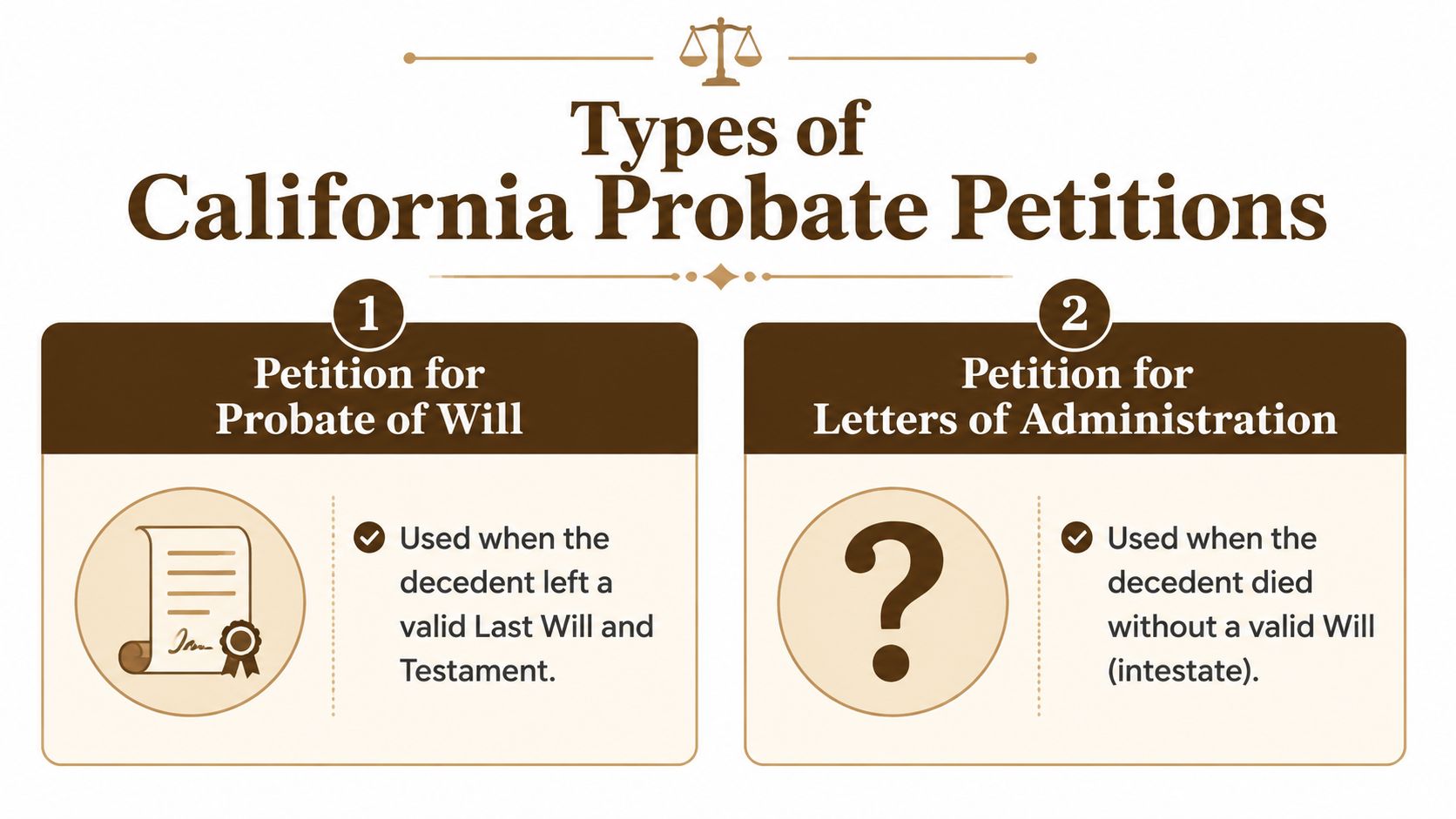
If there is a valid will, the usual filing is a petition that asks the court to admit the will to probate and appoint the named executor. The executor is the person chosen by the decedent in the will.
If there is no valid will, the estate is administered as an intestate estate. In that setting, the court appoints an administrator instead of an executor. The administrator performs a similar role, but the authority comes from the court and the estate is distributed under California intestacy rules rather than under a will.
Probate Petition Types in California
| Situation | Petition Type | Person Appointed | Guiding Document |
|---|---|---|---|
| Decedent left a valid will | Petition for Probate of Will | Executor | Last Will and Testament |
| Decedent died without a valid will | Petition for Letters of Administration | Administrator | California intestacy law |
That table may look simple, but it clears up one of the most common misunderstandings. Families often use the word “executor” for everyone. In legal practice, that isn't always accurate. If there is no will, the court usually appoints an administrator, not an executor.
Who usually has priority to file
The right to file doesn't belong to just anyone who feels responsible. In most will-based cases, the person named as executor has the first claim to serve. If that person can't serve or declines, the court looks to other eligible individuals.
In no-will cases, the court generally considers family relationships in a priority order, often starting with the surviving spouse and then moving through close relatives such as children.
Here's the practical way families should consider it:
- Named executor: If the will names you, you usually start the process.
- Surviving spouse: If there is no effective executor, the spouse often has a strong claim to seek appointment.
- Adult children or other close relatives: They may petition when there is no will, or when the named person won't act.
Why the distinction matters
The title affects more than vocabulary. It affects how the court frames the appointment and how the estate is ultimately distributed. A will-based case asks the court to honor the decedent's written instructions. An intestate case asks the court to apply California law because no valid written roadmap controls.
If you're unsure whether the document you found is valid, don't assume the court will treat it as a controlling will. Validity questions can change the entire petition.
That's one reason families often need careful review before filing. An incomplete or mistaken petition can cause avoidable delay, especially where a house sale or refinance is waiting in the background.
Required Forms and Documents for Your Petition
A strong probate filing starts with a simple idea. The court is being asked to hand one person legal authority over someone else's property, debts, and records. Before a judge does that, the file has to answer three practical questions. Who died, what gives this court authority to act, and why is this petitioner the right person to receive that authority?
That is why the paperwork can feel repetitive, especially in estates that include a house in Orange County or Los Angeles. When a family is trying to protect a valuable home, keep insurance in place, or prepare for a sale, missing paper is not a minor clerical issue. It can stall the appointment and delay every decision that depends on it.
Form DE-111 is the map for the case
The centerpiece is Form DE-111, Petition for Probate. This form tells the court how the case should be framed from the start. It identifies the decedent, states where the decedent lived, says whether a will exists, and tells the court what appointment is being requested.
DE-111 works like the case map. If the map is wrong, the court may send you back for corrections, or worse, set the matter for hearing with avoidable problems already built in.
That matters more than families often expect. In a high-value real estate market, small mistakes about domicile, title, or the existence of a will can create larger delays later when a listing agent, buyer, lender, or title company asks for clean authority documents.
The supporting documents each answer a different legal question
The petition does not stand alone. The court usually expects a set of documents that support the story told in DE-111.
- Original will: This helps the court determine authenticity and confirms whether the decedent left written instructions about who should serve and who should inherit.
- Certified death certificate: This verifies the death through an official record and ties the probate case to the correct person.
- Form DE-121, Notice of Petition to Administer Estate: This gives heirs, beneficiaries, and other interested parties formal notice of the hearing and a chance to object.
- Duties and Liabilities of Personal Representative: This warns the proposed personal representative that the job carries fiduciary duties. In plain English, the person appointed must act for the estate's benefit, keep good records, and avoid self-dealing.
- Proposed order: This gives the judge a draft ruling to sign if the petition is granted, which helps the court process the matter efficiently.
Each document solves a separate problem. The will addresses authenticity. The death certificate confirms the event that triggers probate. The notice form protects due process. The duties form makes clear that appointment is a legal responsibility, not just a family title.
Why families get tripped up here
Many petitioners assume the court wants forms because courts like forms. A petition for probate is less about paperwork and more about risk control.
The judge is trying to prevent three common problems before they start. The wrong person gets appointed. Interested relatives are left in the dark. Property gets transferred based on incomplete or disputed information.
That risk-control function becomes easier to see in real estate-heavy estates. If the estate includes a house with significant equity, one missing attachment or one inconsistent fact can slow down the authority needed to secure the property, deal with mortgage statements, or move toward a sale. Families often feel that delay as a practical problem long before they understand it as a legal one.
Client advice: If two forms ask for similar information, do not assume one makes the other unnecessary. Probate filings repeat key facts because the court, the parties receiving notice, and outside institutions may rely on different parts of the file.
A careful filing package gives the court confidence early. That confidence matters. It often determines whether the case starts with momentum or with a request to correct avoidable defects.
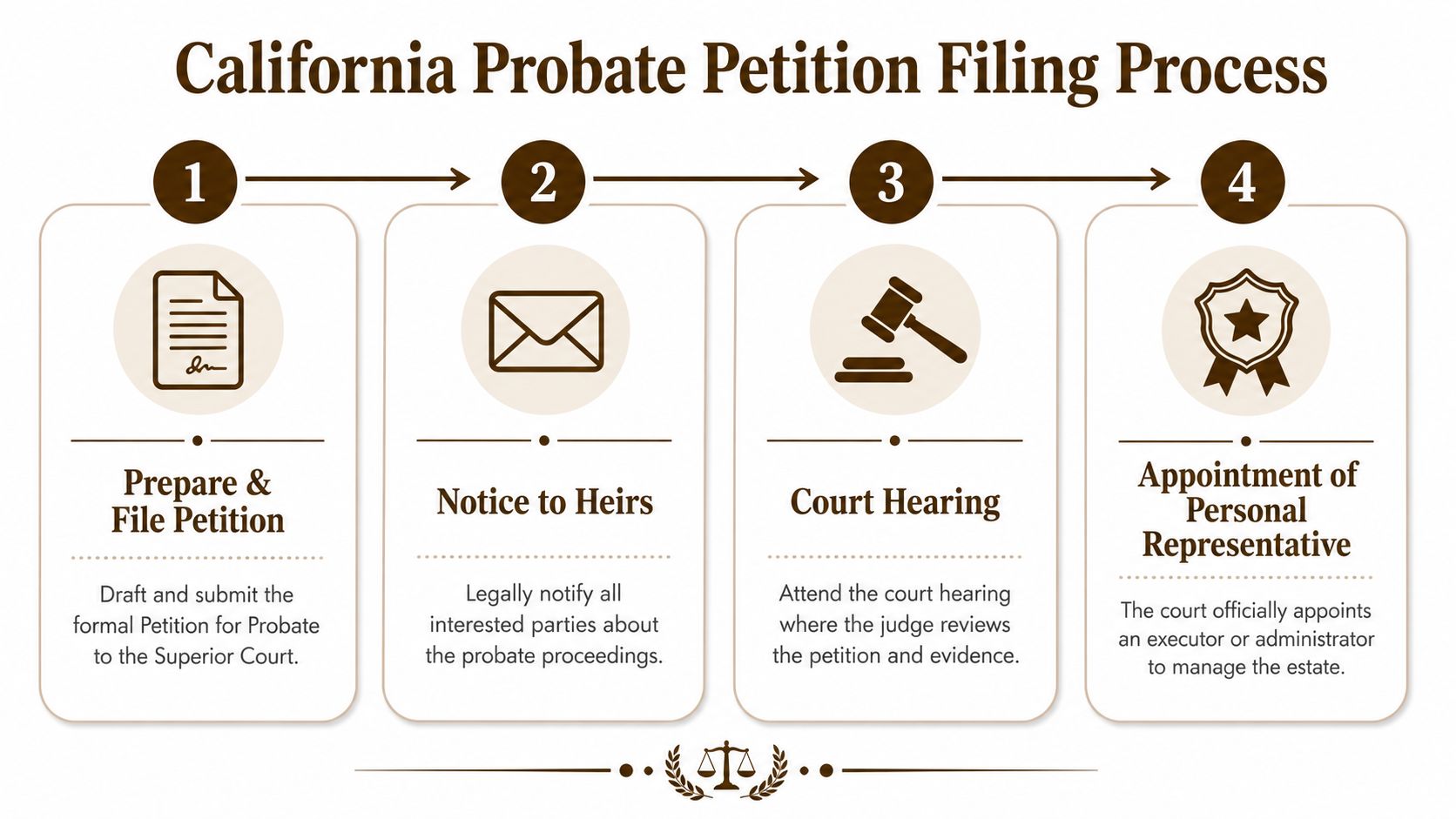
The California Probate Petition Filing Process Step by Step
Once the paperwork is assembled, the process becomes a sequence. Missing a step can delay the hearing, so it helps to understand not just what happens, but why the court insists on the order.
A simple visual can help orient you before diving into the details.
Filing starts in the correct court
The petition is filed in the Superior Court of the county where the decedent lived. For many readers here, that means an Orange County or Los Angeles County probate court.
At filing, the court opens the case, reviews the submission for completeness, and assigns a hearing date. The average filing fee for a petition for probate across California counties is $435, and petitioners must also publish a copy of the Notice of Petition to Administer Estate three times in a local newspaper of general circulation, according to California probate filing fee and publication requirements.
That fee is only part of the practical burden. Publication matters because probate is a public court process. The point is to provide notice beyond the immediate family, including to unknown interested parties.
Notice is not a technicality
Many self-filed matters often run into trouble. California requires notice because the court doesn't want to appoint a representative in secret.
Under Orange County probate guidance, notice of the petition must be given to interested persons at least 15 days before the hearing date. The purpose is fairness. Heirs, beneficiaries, and other interested parties deserve time to review the filing and decide whether they agree, object, or appear.
In practical terms, the notice step usually includes:
- Mailing or personal delivery: Interested parties receive the notice of hearing.
- Newspaper publication: The legal notice is published as required.
- Proofs of notice: The court expects evidence showing these tasks were completed correctly.
A quick overview can also make the sequence easier to follow.
If notice is defective, the court may postpone the hearing or require the process to be redone. That can be especially costly when a property sale is waiting.
What happens at the hearing
Many probate hearings are brief when the paperwork is in order and no one objects. The judge or probate examiner wants to confirm that the petition is proper, the required notice was given, and the proposed representative is legally eligible.
If there's a problem, it usually falls into one of a few categories:
- Missing documents: An original will or proof of notice may be absent.
- Conflicts in the paperwork: Names, dates, or asset descriptions may not match.
- Family objections: Someone disputes the will, the appointment, or the adequacy of notice.
When the hearing goes well, the court grants the petition and authorizes the next stage of administration. At that point, the estate moves from “requesting authority” to “using authority.”
Timelines Complications and What Comes Next
A court order granting the petition often feels like the hard part is over. For many families, especially those dealing with a house in Orange County or Los Angeles, it is the point where the real administrative work starts.
That can be frustrating if everyone is waiting on access to accounts, a refinance, or a sale of the family home. But the timing makes more sense once you see what probate is designed to do. The court is not only appointing someone. It is also creating a supervised process to protect heirs, creditors, and anyone else with a legal interest in the estate.
What the timeline usually looks like
Probate usually unfolds in stages, and each stage serves a purpose. After appointment, the personal representative has to locate assets, secure property, gather date-of-death values, review debts, deal with taxes if needed, and keep the estate organized well enough for a final accounting.
That is why probate often takes many months rather than a few weeks.
Real estate is one of the biggest reasons. A house is not like a checking account that can be identified and transferred with a few statements. Title may need review. Insurance may need updating. The property may need appraisals, repairs, cleanout, or a decision about whether it will be sold or distributed. In higher-value markets, delay also has a practical cost because carrying expenses, vacancy concerns, and disagreements over value tend to be larger.
Some files also slow down for reasons that have nothing to do with the court calendar. Missing deeds, uncertain account ownership, poor recordkeeping, or family members who do not agree on next steps can all stretch out the process.
What the court issues after approval
After the judge approves the petition, the representative still needs the documents that prove authority to the outside world. After the court grants the petition, the personal representative must obtain the Order for Probate (Form DE-140) and Letters (Form DE-150), which serve as proof of authority to banks, insurance companies, and government agencies to access and transfer assets, as explained in this discussion of California probate order and letters forms.
Those Letters work like credentials for the estate. Before they are issued, a bank, title company, or transfer agent may refuse to act. After they are issued, the personal representative can begin collecting assets, dealing with institutions, and handling transactions in an official capacity.
For families, this is often the first moment when the process starts to feel real.
Common complications families should expect
Probate complications usually fall into two groups. Some are paperwork problems. Others are people problems.
Paperwork problems include missing originals, inconsistent names, unclear asset ownership, or records that do not match how property was held. Those issues matter because probate is built on legal title and written proof. If the deed says one thing and the family believes another, the court and third parties will follow the paper trail until someone fixes the record.
People problems can be harder. One child wants to keep the house. Another wants it sold right away. A beneficiary suspects the proposed representative is favoring one side of the family. Grief often sharpens disagreements that had been simmering for years.
The personal representative is not there to make everyone equally happy. The job is to follow fiduciary duties, protect estate assets, give required notices, and carry out the estate administration in a legally defensible way. That is the "why" behind so much of probate procedure. The rules can feel formal, but they exist because money, property, and family history tend to collide in predictable ways.
When families understand that point early, they usually make better decisions about records, communication, and timing.
When You Need a Probate Attorney for Your Petition
Some probate petitions are straightforward enough that families can at least understand the basic path on their own. Others carry enough risk that legal guidance is the safer choice from the start.
A practical checklist
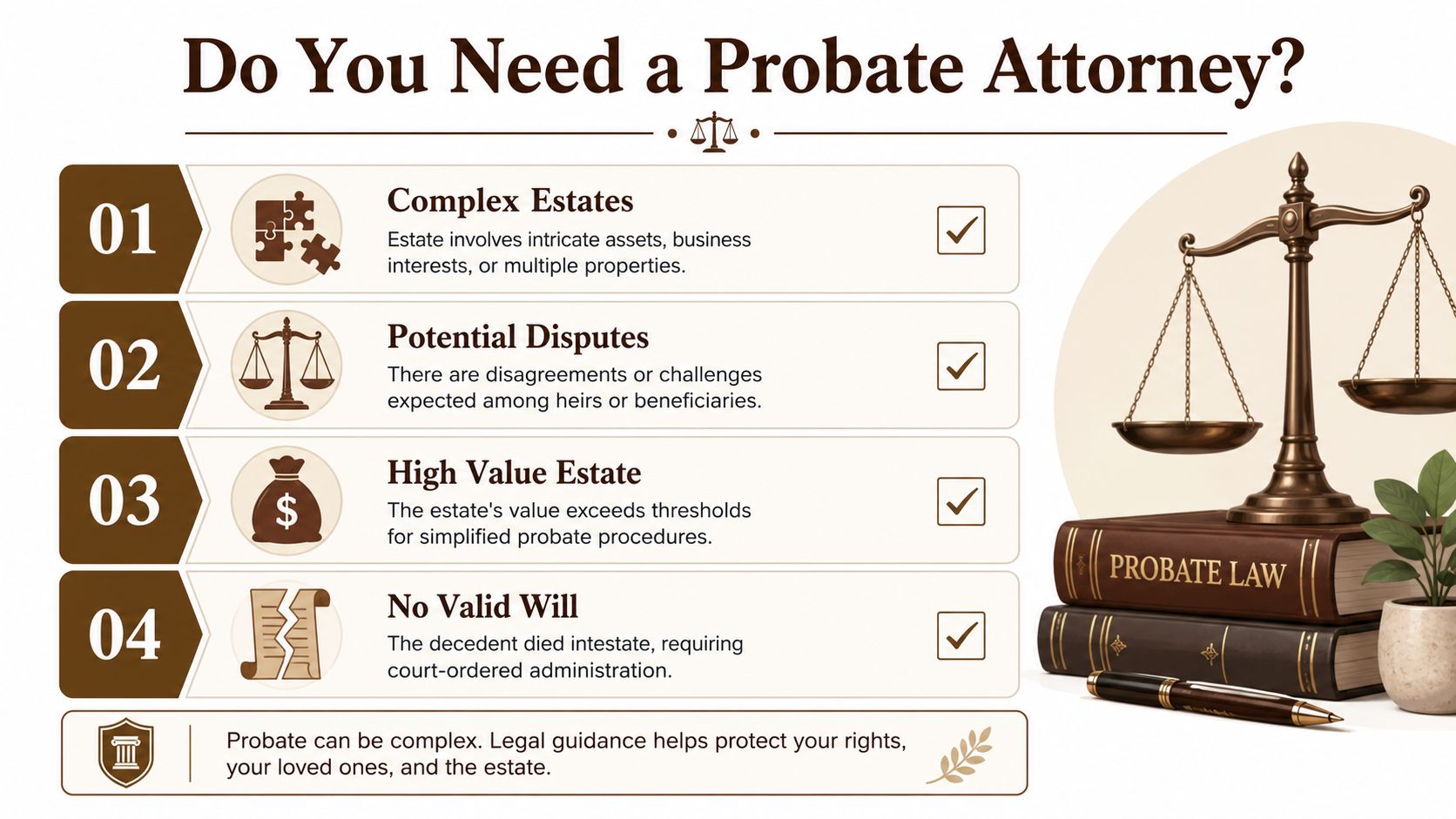
You should strongly consider probate counsel if any of these apply:
- There is California real estate in the estate: Homes in Orange County and Los Angeles often create title, valuation, occupancy, or sale issues that make probate more demanding.
- There is no valid will: Intestate administration tends to create more questions about who serves and who inherits.
- Family conflict is already visible: If heirs disagree before the filing, they usually won't become easier after it.
- The paperwork is unclear or incomplete: Missing originals, uncertain asset ownership, or inconsistent records can trigger delay.
- A business interest or multiple properties are involved: More assets usually mean more moving parts and more room for mistakes.
For families looking at representation, Tanner Law is one Orange County option that handles probate matters along with related real estate issues, which can be useful when an estate includes a home, title concerns, or a pending sale.
A probate attorney doesn't remove grief from the process. What counsel can do is reduce preventable mistakes, protect estate value, and keep authority problems from turning into larger disputes.
If you're facing a petition for probate in Orange County or Los Angeles, and you want clear guidance under California law, schedule a free consultation with Tanner Law. You'll get practical, straightforward advice about your next step, your filing obligations, and how to protect the estate while probate moves forward.