Declaration of Homestead in California: A 2026 Guide
If you own a home in Orange County or Los Angeles, you may already have a nagging question in the back of your mind. Your equity has grown, property values remain high, and one unexpected lawsuit, collection matter, or financial dispute could put pressure on an asset your family depends on.
That's where California homestead law matters. It protects a portion of a homeowner's equity, but many people misunderstand what protection they already have and when recording a separate declaration helps. In practice, the most common 2026 question isn't whether homestead law exists. It's whether the newer, much higher exemption amounts have made a recorded declaration less important, or more strategic, in high-cost counties. County materials note that California's exemption is tied to the prior year's countywide median home price and has risen far beyond the old legacy amounts, which is exactly why so many homeowners are rethinking their planning now in Los Angeles County's homestead protection guidance.
Table of Contents
- Protecting Your Home Equity in California
- Understanding California's Two Types of Homestead Protection
- Strategic Benefits and Limits of a Declared Homestead
- How to Complete and Record Your Homestead Declaration
- Homesteads in Bankruptcy Probate and Lien Scenarios
- When to Consult a Real Estate Attorney
Protecting Your Home Equity in California
A common Orange County scenario starts this way. A homeowner bought years ago, paid down the loan, and now has substantial equity because local values rose. Then a judgment, personal guaranty claim, probate issue, or other creditor problem surfaces, and the homeowner needs to know how much of that equity California law protects.

For 2026, that question matters more because California's homestead exemption remains high by historical standards and continues to adjust under the statute. In practical terms, many owner-occupants now have far more protection than they would have had a few years ago. In Orange County, where a family can be equity-rich and cash-tight at the same time, that change affects settlement strategy, sale timing, and how aggressively a creditor can pursue the residence.
A homestead issue is usually an equity issue.
What clients often need cleared up at the outset is whether recording a declaration will change anything meaningful. Sometimes it will. Sometimes the automatic homestead already does most of the work that matters, especially in a forced-sale setting. The strategic question in 2026 is narrower. Will a recorded declaration improve protection in the specific situation the homeowner is likely to face?
That depends on the problem in front of you. If the concern is a judgment creditor trying to force a sale, the automatic homestead is often the starting point. If the concern is preserving proceeds from a voluntary sale and rolling them into a new principal residence, a declared homestead may deserve serious attention. That distinction becomes more important, not less, now that exemption amounts are higher. High exemptions help many homeowners, but they do not make every declaration unnecessary.
A recorded homestead declaration is best viewed as a planning tool, not a universal fix. Used at the right time, it can improve the result. Filed reflexively, it may add paperwork without changing much. The key is matching the filing decision to the title, the equity, the nature of the claim, and whether a sale or transfer is likely.
Understanding California's Two Types of Homestead Protection
The biggest source of confusion is simple. California recognizes automatic homestead protection and declared homestead protection, and they are not interchangeable.
Why the distinction matters
Many consumer pages blur the line between the two. But the difference is important. California's automatic homestead already exists for owner-occupants, while a declared homestead mainly adds protection for voluntary-sale proceeds if the homeowner reinvests within six months, and it does not increase the exemption amount itself, as explained in California homestead declaration guidance for consumers.
That means recording a declaration is not a magic upgrade in dollar value. It changes when and how protection may apply.
A declaration is often most useful when a homeowner expects a sale and wants to preserve protected proceeds while moving those funds into another principal residence.
Automatic vs declared homestead in California
| Feature | Automatic Homestead | Declared Homestead |
|---|---|---|
| How it arises | Exists by operation of California law for an owner who resides in the home | Arises only after a written declaration is properly signed, notarized, and recorded |
| Main setting | Most important in forced-sale or judgment collection situations | Most important when a homeowner wants added title-based protection, especially around sale proceeds |
| Effect on exemption amount | Uses the applicable California homestead amount | Does not increase the exemption amount by itself |
| Voluntary sale proceeds | Limited practical benefit from just relying on the automatic rule | Can help protect voluntary-sale proceeds for a limited reinvestment period |
| Planning use | Baseline protection for many homeowners | Strategic tool when timing and title status matter |
Here's the practical takeaway. If you live in your California home as your principal residence, you may already have substantial protection without recording anything. But if you expect to sell and buy another home, or if you want the public record to reflect a clear homestead claim, a declaration becomes more relevant.
That's why I usually frame this as a strategy decision, not a form-filling exercise. The right answer depends on whether you are staying put, selling soon, dealing with a judgment issue, or trying to simplify future probate or title review. If you want help deciding which framework fits your situation, schedule a free consultation.
Strategic Benefits and Limits of a Declared Homestead
A declared homestead matters most when a homeowner is planning ahead, not reacting late.
In 2026, many Orange County homeowners already have meaningful protection under California's automatic homestead because exemption amounts remain high. That changes the practical question. Filing a declaration usually is not about increasing the exemption amount. It is about whether the declaration adds a real advantage in your specific fact pattern.
The clearest example is a planned sale. A homeowner sells a principal residence, holds the proceeds for a short period, and intends to buy the next home. In that setting, a properly recorded declaration can strengthen the argument that sale proceeds keep homestead protection during the reinvestment window. For clients who expect a gap between closings, that is often the main reason to record.
A declaration can also help create a clearer title record. That does not make a title defect disappear, and it does not defeat a valid lien. It can, however, put your homestead claim in the chain of title where a buyer, title officer, probate lawyer, or creditor's counsel will see it. In practice, that kind of clarity can reduce avoidable fights about residency, intent, and timing.
The limits matter just as much.
A recorded homestead declaration does not increase the statutory exemption by itself. It does not block foreclosure under a deed of trust. It does not wipe out property taxes, child support claims, or other obligations that carry their own enforcement rules. If a creditor already has strong rights against the property, the declaration does not rewrite those rights.
Timing also matters. Recording after a voluntary sale usually misses the point. Recording after a dispute has already hardened may leave you with a document that looks helpful but changes very little. I tell clients to treat a declaration as advance planning, much like keeping title vesting current before a refinance or probate issue surfaces.
For Orange County homeowners in 2026, that leads to a fairly practical divide:
- Good candidates for filing: owners with substantial equity who expect to sell and reinvest, owners cleaning up title records, and owners who want a stronger paper trail before judgment or probate issues develop
- Less urgent cases: owners who are staying put, have no expected sale, and are relying mainly on the automatic homestead for baseline protection
- Poor expectations: anyone hoping the declaration will erase consensual liens, stop ordinary secured lending remedies, or fix title problems by itself
The strategic value is real, but it is narrower than many homeowners assume. With today's higher automatic homestead protection, a declaration is no longer the default recommendation in every case. It is a targeted tool. Used at the right time, it can protect sale proceeds and improve your position. Used reflexively, it may add paperwork without adding much legal benefit.
How to Complete and Record Your Homestead Declaration
A common Orange County scenario is this: a homeowner decides to record a homestead declaration after hearing it might protect the house, then finds out the recorder rejected the document for a preventable formatting or title issue. The legal concept is not usually the problem. The paperwork is.
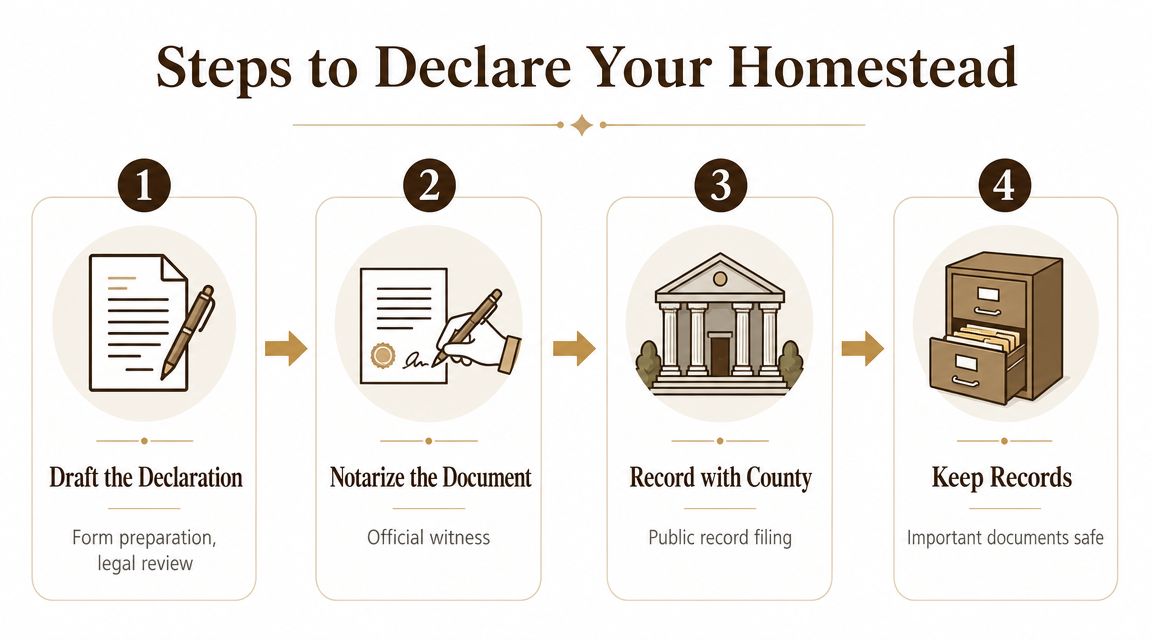
Under California procedure, a declared homestead is created by a signed, notarized declaration recorded in the county where the home sits. Recorder requirements generally include the owner's name, a statement claiming the homestead, a property description, and a sworn statement of truth, as outlined in Sacramento County Recorder guidance on homestead declarations. In practice, the job is simple only if the declaration matches the title record and the recorder's standards.
What belongs in the document
The declaration should identify the owner exactly as title is held, state that the property is the declarant's principal dwelling, and include a recorder-acceptable legal description. Street address alone may not be enough.
A simple sample can look like this:
I declare that I am the owner of the real property located in California described as follows: [legal description or other recorder-acceptable description]. I reside on this property and claim it as my principal dwelling and declared homestead under California law. I declare under penalty of perjury that the foregoing is true and correct.
That wording is only a starting point. The final version should match the vesting deed, the way title is held, and the recorder's formatting rules. If title is in a trust, or if spouses and co-owners hold title in a way that is not obvious from memory, pull the recorded deed before drafting anything.
This video gives a useful overview of the filing process and common issues homeowners run into:
Recording mistakes that cause trouble
Recorder rejections and weak filings usually come from a short list of avoidable errors:
- Missing notarization: An unacknowledged signature can lead to rejection or later challenges.
- Incomplete property description: A casual description can leave the declaration detached from the actual land records.
- Wrong county: Record in the county where the property is located.
- Name mismatch: The declaration should line up with vested title. Nicknames, omitted middle initials, and old marital names can create unnecessary questions.
- Trust or co-owner confusion: If the occupancy and ownership facts are more complicated than a single owner living in the home, review the setup before recording.
Those details matter because the declaration is supposed to strengthen your position on paper. A document that does not track the title record can do the opposite.
A practical filing approach
For most homeowners, the safest process is to work from the deed outward. Get the current vesting deed, confirm the legal description, confirm who holds title, prepare the declaration in recorder-ready form, sign before a notary, and record it in the proper county.
Then keep a conformed copy with the deed, trust papers, and title records. If the property may be sold later, that file matters. The declared homestead often becomes most useful when sale proceeds need to be traced and protected, which is one reason some Orange County owners still record one in 2026 even though the automatic homestead now does more work than it used to.
Some homeowners prepare the form themselves. Others prefer legal review because the actual risk is not the filing fee. It is recording a document that looks valid but does not fit the ownership facts. Tanner Law assists California property owners with preparing and recording declarations of homestead when the residence qualifies. If you want to file without guesswork, schedule a free consultation.
Homesteads in Bankruptcy Probate and Lien Scenarios
A homestead issue often shows up alongside another legal problem. That's when broad legal context matters more than the form itself.
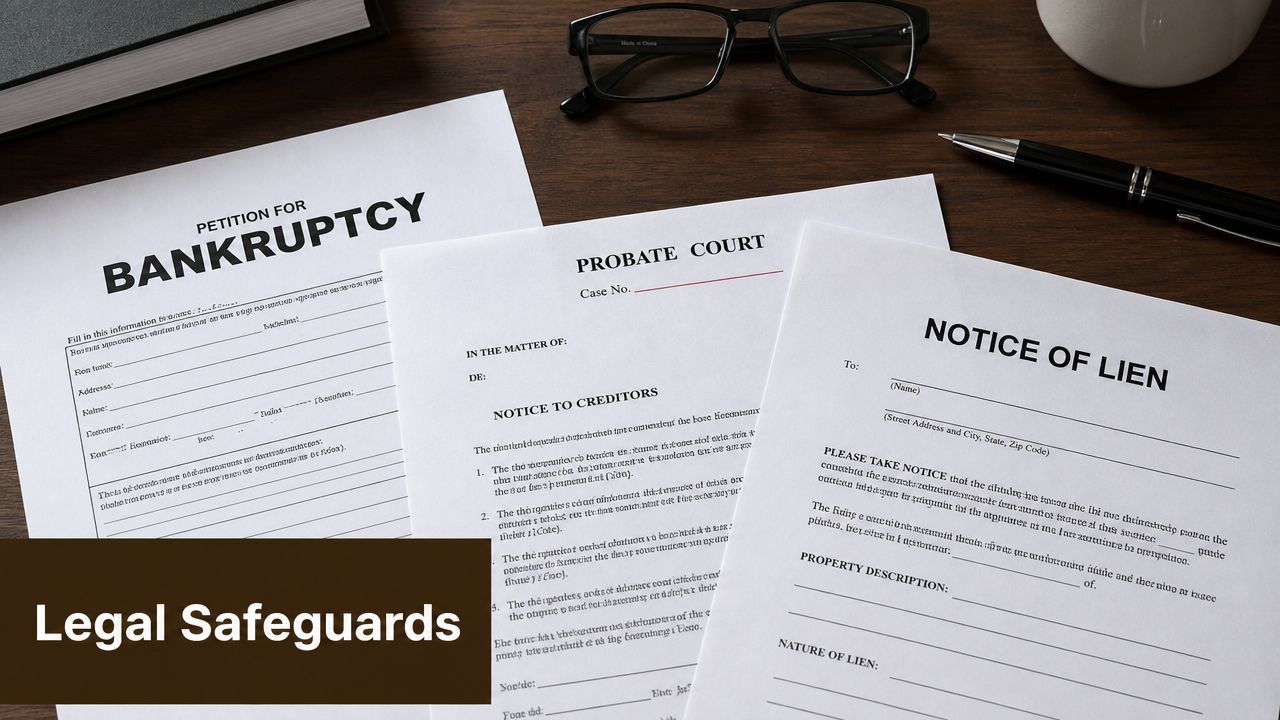
Bankruptcy and creditor pressure
For 2026, California's protected homestead amount is the greater of the countywide median sale price for a single-family home in the prior calendar year, capped at $731,300, or $370,550, according to the Sacramento Law Library homestead declaration guide. In bankruptcy planning, that amount can be central to whether a homeowner's equity is exposed.
But homeowners often focus on the wrong threat. A common mistake is assuming a declaration protects against mortgage debt. It doesn't. Homestead protection is directed at certain unsecured creditor claims, not your consensual mortgage or deed of trust.
If the debt is secured by the home, a homestead declaration usually won't change the lender's rights.
That distinction matters in both Chapter 7 and Chapter 13 analysis. The exemption may protect equity from unsecured creditors and liquidation pressure, but it won't rewrite loan documents.
Probate title issues and recorded liens
In probate matters, the declaration can also intersect with title cleanup and occupancy questions. Families sometimes discover, after a death, that title was never updated, a trust transfer was incomplete, or a judgment lien was recorded years earlier. At that point, the homestead issue becomes part of a larger title and estate problem.
A recorded declaration is not the same as a probate order protecting a surviving spouse or children, and it isn't a substitute for proper estate planning. Still, it can be one useful layer in a broader plan if the homeowner's principal residence, title history, and future sale all line up.
Lien timing also matters. If a judgment creditor is already active, the order of events can shape your options. That's why pre-bankruptcy planning, probate administration, and lien review should be handled together rather than in isolation. If your homestead question overlaps with debt, probate, or a recorded lien, get legal advice before filing anything.
When to Consult a Real Estate Attorney
Recording a homestead declaration can be straightforward. Deciding whether it is worth recording is often the harder legal question.
Legal review makes sense if title is held in a trust, shared with relatives, affected by a recorded judgment, tied to a divorce, or part of bankruptcy or probate planning. The same is true if you are unsure the property qualifies as your principal residence, or if the chain of title shows old deeds, name mismatches, or incomplete transfers. Those issues can turn a simple recording into a title problem with consequences later, especially when you try to sell or refinance.
For many Orange County homeowners in 2026, the main question is strategic. California's automatic homestead now protects a substantial amount of equity in many situations. That means a recorded declaration is not always the first move. It can still be useful, but only in the right set of facts, particularly when a voluntary sale, title planning, or future creditor issues are part of the picture.
Timing matters.
A lawyer should be helping you answer three practical questions: does the automatic homestead already cover the risk you are worried about, does a declared homestead add a real benefit, and is there any title or estate issue that should be fixed before anything gets recorded. That review is often more valuable than the form itself.
If you'd like practical advice about a declaration of homestead in California, title issues, probate-related property questions, or creditor pressure involving your home, contact Tanner Law to schedule a free consultation. A focused review can help you decide whether recording a declaration fits your property, your equity, and your next step.