Spousal Elective Share in California: A Complete Guide
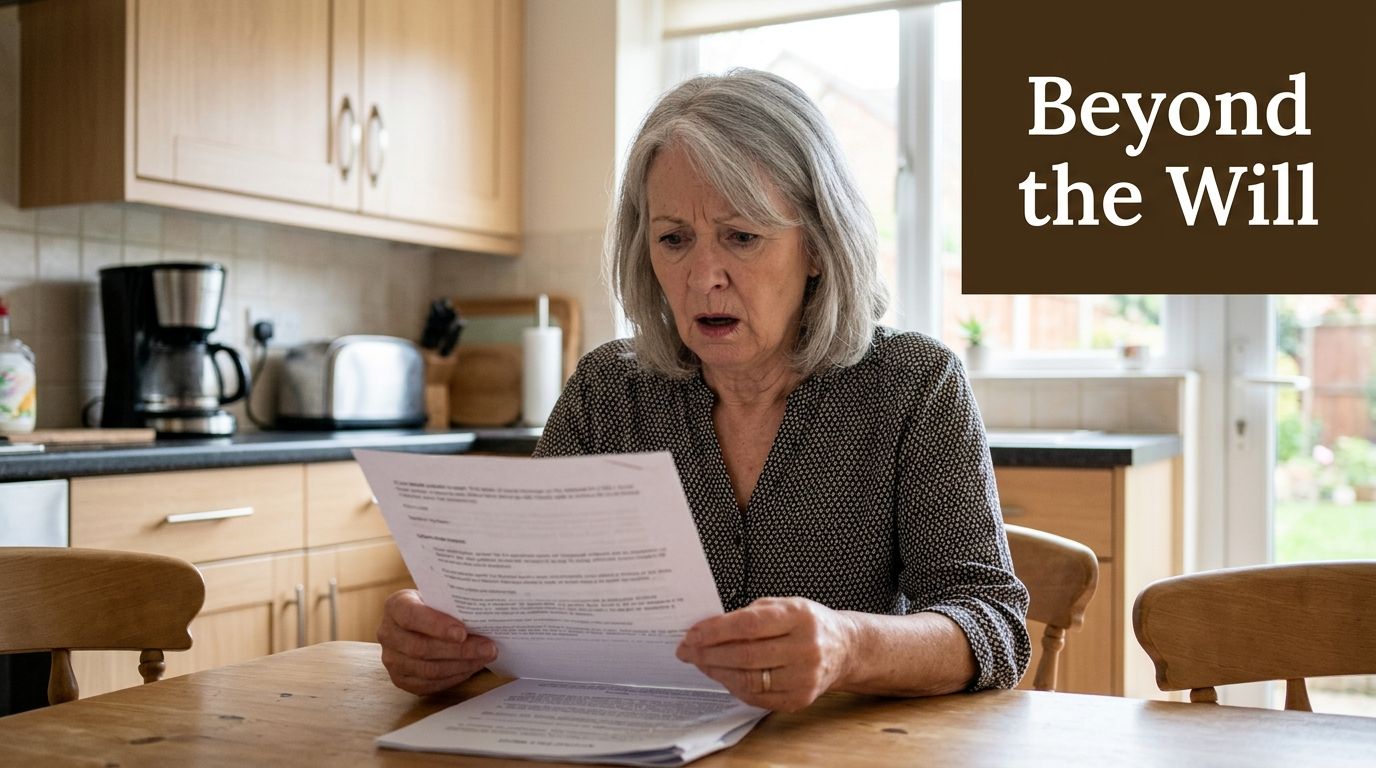
You may be sitting at the kitchen table right now, staring at a will or trust that seems to leave you with very little, or nothing at all. That kind of shock is common after a spouse dies, especially in California families where the estate plan was drafted years ago and never updated after remarriage, a new house, or a shift in family relationships. The good news is simple, the document you're holding is not the final word on what a surviving spouse may receive.
California law gives surviving spouses real protections, and those protections can reach beyond the language in the will. In many estate disputes, the fight is not just about what the decedent wrote down, but about whether the law gives the surviving spouse a right to claim more. That is why spousal elective share issues, and California's omitted-spouse framework, matter so much in Orange County and Los Angeles probate cases.
Table of Contents
- When a Will Does Not Tell the Whole Story
- What the Spousal Elective Share Means
- How California Differs from Other States
- Calculating the Share When Assets Sit Outside Probate
- Deadlines and Procedural Steps to Assert Your Claim
- Planning Strategies and Common Pitfalls to Avoid
- Protecting Your Rights with Experienced Legal Counsel
When a Will Does Not Tell the Whole Story
A widow in Santa Ana opens the mail expecting routine probate papers. Instead, she sees a trust and a will that leave the house to the decedent's adult children from a prior marriage, while she's mentioned only in passing, or not at all. Her first reaction is usually anger, then fear, then the same question every surviving spouse asks, Did my spouse really cut me out?
California law can still protect the surviving spouse
The answer is often no, not completely. California's omitted-spouse rules can give a surviving spouse rights even when the estate plan was signed before the marriage or never updated after a later marriage. Under California Probate Code section 21610, a spouse married after the will or trust was signed is generally entitled to the share they would have received if the decedent had died intestate, unless an exception applies. California-specific neutral source was not provided in the brief, but the rule itself is the key point families need to know.
That matters because the will alone doesn't control everything. A spouse who feels shut out may still have a real claim, and the claim may extend into assets the family assumed were untouchable. In a blended family, that distinction can decide whether the surviving spouse receives meaningful support or gets forced into a long fight.
Don't wait for the personal representative to “do the right thing”
A personal representative doesn't always volunteer the surviving spouse's rights. Probate administration is procedural, and if the surviving spouse sits back and waits, deadlines can pass and influence can disappear. The right move is to identify whether the spouse was left out, whether the marriage came after the estate plan, and whether California's omitted-spouse protections may apply.
Practical rule: If the surviving spouse was added to the family after the document was signed, the estate plan deserves immediate legal review, not assumptions.
For families in Orange County and Los Angeles, that review should happen early. A surviving spouse doesn't need to prove the estate plan is unfair in a moral sense, only that California law may entitle them to a share the document didn't mention.
What the Spousal Elective Share Means
The spousal elective share is a legal backstop. If a deceased spouse tries to leave everything to someone else, the law can still set aside a statutory share for the surviving spouse so the person who built the marriage is not left with nothing. In estate-planning sources across many states, that share often falls between one-third and one-half of the estate, and some states also impose filing deadlines and added monetary protections (FindLaw).
The right exists because marriage creates legal dependency
That is the policy behind the rule. The law recognizes that spouses often build a life together even when only one name appears on title or in the will. A surviving spouse should not be left fully exposed just because the decedent used a will, trust, or beneficiary form to direct assets elsewhere.
The right is not automatic in many jurisdictions. A spouse usually has to affirmatively elect to take the statutory share, and missing the filing deadline can end the claim entirely. Maryland-style summaries describe a written election deadline of 9 months after death or 6 months after the personal representative is appointed, whichever is later, and Massachusetts requires election within 6 months after death (FindLaw).
The claim can reach beyond the probate file
The biggest mistake families make is assuming the elective share is just a percentage of whatever sits in probate court. In modern estate practice, the base can be broader. The elective share may be calculated against an augmented estate, which can include certain nonprobate transfers and lifetime gifts, and surviving spouses may already be credited for transfers they receive outside probate (RPPTL).
A will is only one piece of the puzzle. The question is what the law counts as the estate base.
That is why the elective share is not just an inheritance concept. It is a protection rule, a timing rule, and in many states, a valuation rule all at once.
How California Differs from Other States
A surviving spouse in California does not start with a percentage chart. The central question is whether the spouse was omitted from an estate plan that was signed before the marriage, or whether one of the statutory exceptions cuts the claim off. That is a very different system from the elective-share rules used in many other states, and it changes how families should read a will, trust, or beneficiary form.
Side-by-side comparison
| State | Share Amount | Key Feature |
|---|---|---|
| California | Intestacy share for an omitted spouse | Protects a spouse married after the will or trust was signed |
| Florida | 30% of the elective estate | Filing deadline tied to notice of administration or death (Upchurch Law) |
| New York | Greater of $50,000 or one-third of the net estate | Fixed minimum plus fraction |
| North Carolina | 15% to 50%, based on marriage length | Sliding scale tied to duration (North Carolina General Statutes) |
Why that difference matters in real cases
A percentage-based state tells families the payout structure from the start. California does not work that way. The omitted-spouse rule asks whether the surviving spouse was left out of a plan that predates the marriage, whether the omission was intentional, and whether an exception defeats the claim. That makes California more forgiving when a spouse was plainly overlooked, but it also means the result turns on facts, not on a simple formula.
State law differences are not cosmetic. Florida fixes the elective share at 30% of the elective estate, New York gives the greater of $50,000 or one-third of the net estate, and Virginia uses one-third if there are descendants or one-half if there are none. North Carolina ties the share to marriage length, from 15% to 50%.
California families cannot borrow another state's rule and assume it will fit. An Orange County widow or widower may have a very different result from a family with the same basic facts in Florida or New York, because California starts with omission and intent, not a fixed elective-share percentage.
Calculating the Share When Assets Sit Outside Probate
A will rarely shows the full inheritance picture. In California, the core dispute often begins with assets the will never touches, revocable trusts, payable-on-death accounts, joint tenancy property, and beneficiary designations. Families examine the probate file, see a small estate, and assume the surviving spouse has little to claim. That assumption is usually wrong.
The calculation depends on what counts
The first question is not what the will says. It is what property is pulled into the spouse's claim and how the law classifies it. California's omitted-spouse framework often turns on whether the surviving spouse was left out of an older plan and whether any exception defeats the claim. In states that follow a Uniform Probate Code model, the calculation reaches beyond probate and looks at the marital property fraction of the broader estate, which is why a trust document or account beneficiary form never ends the analysis by itself (Montana elective share summary, JIC Estates).
Montana's summary of that model shows the marital-property fraction rising with the length of the marriage and notes a minimum elective-share amount as well (Montana elective share summary). That approach matters because it shifts the fight from the paper will to the actual wealth pattern built during the marriage.
Why California families need a different lens
A California blended-family case usually starts with a trust, not a simple probate estate. A spouse may die after funding a revocable trust, naming pay-on-death beneficiaries, and holding property in joint title, while the probate file shows very little. That does not tell the surviving spouse what was really available.
The practical question is whether assets outside probate change what the spouse can claim under the law that applies. Some state statutes and model explanations treat survivorship rights, annuities, and certain lifetime transfers as part of a larger elective-share calculation, which is exactly why lawyers have to map the whole asset structure before giving a family any answer (Pennsylvania statute reference). California families should use that same discipline even though the state's omitted-spouse rules work differently from the UPC model.
Bottom line: The will is only one document. The asset map decides what the spouse can actually reach.
If most of the wealth sits outside probate, the work is tracing title, beneficiary designations, and predeath transfers, then matching those facts to the correct California rule. That is the part a grieving family cannot afford to guess about.
Deadlines and Procedural Steps to Assert Your Claim
A surviving spouse who waits is usually making the other side's job easier. Elective-share and omitted-spouse rights are deadline driven, and a missed filing can wipe out a claim even when the underlying facts favor the spouse. The exact window varies by state and by how the estate is being administered, so the first mistake is guessing.
What the spouse should do immediately
Start by getting the estate papers. That means the will, any trust, letters of administration or testamentary if probate has opened, account statements, and every notice already served by the personal representative. Then counsel needs to sort out whether the claim is an elective-share issue, an omitted-spouse issue, or both.
Timing controls the case. Maryland-style summaries show that the election must be filed in writing within the later of 9 months after death or 6 months after appointment of the personal representative (FindLaw). Virginia adds a financial consequence, the spouse may be entitled to interest at the legal rate from death until the elective share is satisfied. Delay can cost real money.
A practical checklist for Orange County and Los Angeles families
- Get the probate case number quickly. If the estate is already open, the clock may already be running.
- Identify the controlling document. A will, trust, or both may be involved, and California's omitted-spouse analysis depends on timing.
- Gather nonprobate asset records. Revocable trusts, beneficiary forms, and joint accounts can matter in the valuation analysis.
- Confirm the filing deadline in writing. Do not guess, and do not rely on family members to calculate it.
- Use a probate attorney before assets move. Once distributions start, recovery gets harder.
The spouse's claim is usually not automatic, and informal family promises will not preserve the right. If the estate has already begun administration and the spouse was not notified, treat that as a warning sign and act fast.
Planning Strategies and Common Pitfalls to Avoid
The best elective-share dispute is the one you never create. Families can avoid most problems by updating documents after remarriage, aligning trust language with beneficiary designations, and checking whether a prior estate plan still reflects current intentions. Blended families need to be especially careful, because older documents often leave the surviving spouse vulnerable to surprise.
Build the plan around the marriage, not around old paperwork
If someone remarries in California and never updates the will or trust, the resulting fight is predictable. The surviving spouse may invoke omitted-spouse protections, while children from a prior relationship argue the old plan should stand. That conflict usually gets worse, not better, once probate opens.
A prenuptial or postnuptial agreement can help if it is properly drafted and executed, because it can waive or shape spousal inheritance rights. So can a trust structure that anticipates spouse rights instead of pretending they won't matter. Those tools only work when they're coordinated with the rest of the estate plan, not left to sit in a drawer.
The most common mistakes are preventable
- Failing to update beneficiary designations. A new will doesn't always override an old retirement or insurance form.
- Assuming a trust solves everything. California probate and trust administration can still involve spousal rights.
- Leaving assets titled inconsistently. Title, trust funding, and beneficiary forms need to match the plan.
- Ignoring remarriage. The law treats a later spouse differently from an ex-spouse or long-standing family arrangement.
- Waiting until death to fix an outdated plan. That's when litigation costs go up and family conflict hardens.
An estate plan that doesn't match the family's current life is an argument waiting to happen.
For California families, especially in Orange County and Los Angeles, the cleanest strategy is a full document review after any major life event. Marriage, remarriage, divorce, a new house, or a new child should trigger a fresh look. That review usually costs far less than litigating an omitted-spouse or elective-share dispute later.
Protecting Your Rights with Experienced Legal Counsel
The spousal elective share exists for one basic reason, to stop unfair disinheritance of a surviving spouse. California's omitted-spouse rules add another layer of protection, and the augmented-estate approach used in many jurisdictions shows why a will alone rarely tells the whole story. Once you add strict deadlines and asset-inclusion rules, the case becomes too important to handle casually.
Get help before the estate hardens into a fight
Every family's facts are different. A second marriage, a trust signed before the wedding, a house in joint tenancy, or a beneficiary form that was never updated can all change the result. That's why these cases need personalized legal analysis, not generic probate advice.
Tanner Law, led by William T. Tanner, has served Orange County clients since 1994 and handles probate and related property disputes with direct attorney access and cost-conscious representation. The firm is located at 1913 E. 17th Street, Suite 212, Santa Ana, CA 92705, and it offers free initial consultations by phone or email for families who need immediate guidance. If you're in Orange County or Los Angeles and you're dealing with a surviving spouse claim, an omitted-spouse issue, or a trust that doesn't match the family reality, get advice now.
The right lawyer won't just read the will. The right lawyer will test the will against California law, the asset records, and the deadline that's already running.
If you're facing a spousal elective share or omitted-spouse issue in California, Tanner Law can help you sort out the estate documents, the probate timeline, and the assets that may still be in play. Schedule your free consultation with Tanner Law today, and get clear guidance from an Orange County probate lawyer who understands how these disputes really get resolved.