William Tanner Probate Attorney: A California Guide
When a family member dies, the legal paperwork usually lands on one person's shoulders fast. Sometimes it's the adult child who found the will in a desk drawer. Sometimes it's the surviving spouse trying to manage a house, bank accounts, and worried relatives at the same time. In California, that moment feels personal and administrative all at once.
If you've been asked to act as executor, or you're an heir trying to understand what happens next, you probably need two things right away. You need a clear explanation of the probate process, and you need practical guidance for the disputes that often come with it, especially when a home, rental property, or family disagreement is involved.
That's where a William Tanner Probate Attorney search usually begins. William Thomas Tanner's attorney profile shows that he has been licensed in California for 31 years, admitted on 12/12/1994, and that probate is his largest practice area at 45%, alongside litigation at 30% and real estate at 10%. That mix matters. Probate rarely stays confined to filing forms. It often turns into questions about title, occupancy, creditor pressure, and conflict between relatives.
The good news is that California probate is manageable when it's handled in the right order. The court expects a process. Families usually need a plan. Those are not the same thing, and a strong probate lawyer helps connect them.
Table of Contents
- An Introduction to Your Duties After a Loss
- What is Probate in California and When is it Required
- The California Probate Process Step by Step
- Common Probate Challenges and How to Resolve Them
- How Tanner Law Manages Your Probate Case
- Real World Probate Resolution Examples
- Frequently Asked Questions About California Probate
An Introduction to Your Duties After a Loss
Most executors don't feel prepared when probate starts. They're grieving, fielding calls from family, and trying to figure out whether they're supposed to pay bills, secure the house, or go to court first. In California, acting too quickly can create problems, but doing nothing can create different ones.
Your first duty is usually not to solve every issue immediately. It's to protect the estate from avoidable loss. That can mean securing mail, locating key documents, preserving real estate, and identifying who has authority to act. If there's a will, the named executor may need court appointment before taking certain steps. If there's no will, a close family member may need to petition to become administrator.
What families usually miss at the beginning
The early mistakes are predictable:
- Paying debts from personal funds: You usually shouldn't do this without advice.
- Letting one heir take possession of property: Informal arrangements often create later disputes.
- Ignoring title and deed issues: Real estate often becomes the center of the case.
- Assuming a will avoids court automatically: In California, a will and probate often go together.
Practical rule: Before you transfer, sell, distribute, or promise anything from the estate, confirm who has legal authority to act under California law.
Orange County and Los Angeles families often face probate issues that overlap with civil litigation and property law. A house may be occupied by one sibling. A rental may need management while the estate is pending. A creditor may demand payment before the estate has liquidity. Those aren't unusual complications. They're common probate realities.
What helps is a lawyer who can see the whole matter, not just the petition that starts it.
What is Probate in California and When is it Required
Probate is the court-supervised process for gathering a deceased person's assets, paying valid debts, and transferring what remains to the right people. The simplest way to think about it is this. Probate closes the person's legal and financial affairs in an orderly way, much like winding down the business side of a life.
In California, not every asset goes through probate. That's one reason families are often confused at the start. One estate can contain both probate assets and non-probate assets.
Assets that commonly go through probate
Probate usually applies to assets owned in the decedent's individual name when there's no built-in transfer mechanism. Common examples include:
- A house titled only in the decedent's name
- A bank account with no payable-on-death beneficiary
- Personal property owned individually
- Claims belonging to the decedent or estate
Assets that may bypass probate
Some property transfers outside the formal probate estate, depending on how it was titled or designated:
| Asset type | May avoid probate | Why |
|---|---|---|
| Property in a living trust | Yes | The trust, not the individual estate, controls transfer |
| Life insurance with a named beneficiary | Often | The company pays the named beneficiary directly |
| Joint tenancy property | Often | Survivorship rights may transfer ownership |
| Accounts with beneficiary designations | Often | The contract directs the transfer |
That doesn't mean these assets are always problem-free. Beneficiary disputes, trust administration questions, and title problems can still arise. It means the issue may not require a full probate petition in the same way.
When families should stop guessing
Whether probate is required depends on the nature of the assets, the title records, and the family situation. A person may leave a will, but the estate can still need court involvement. Another person may die without a will, yet much of the property may pass outside probate because of trust planning or beneficiary designations.
Probate is less about whether someone “had a will” and more about how assets were legally owned when they died.
This is also where practical judgment matters. Some families need full probate counsel immediately. Others may only need help reviewing title, preparing a petition, or addressing one disputed issue. If the estate includes California real estate, contested instructions from heirs, or questions about creditor claims, it's smart to get advice before taking action.
The California Probate Process Step by Step
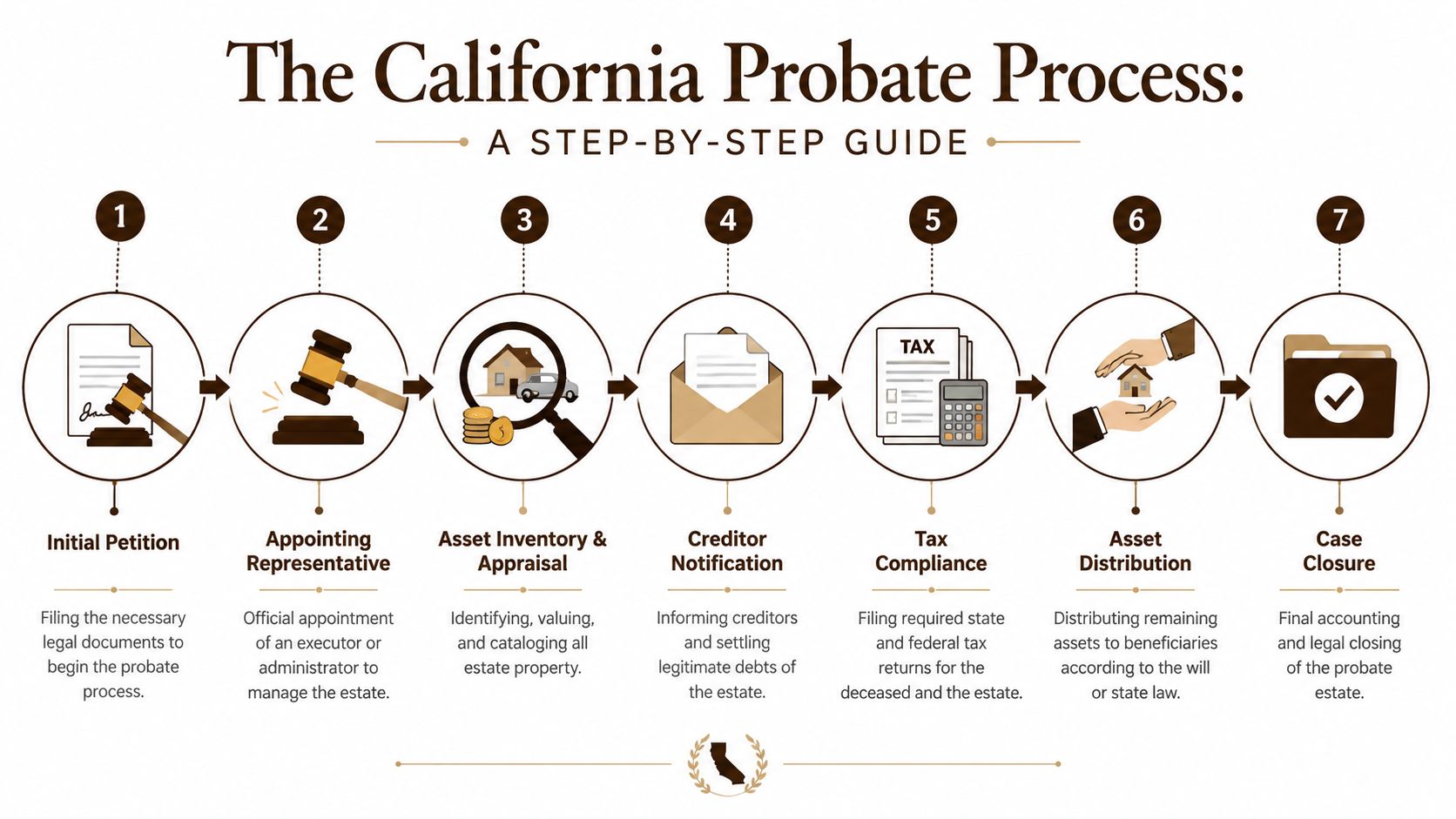
California probate follows a sequence. The paperwork can feel overwhelming, but the process itself is structured. Once you understand the order, the case becomes more predictable.
Opening the case
The process starts with filing a petition in the probate court. This asks the court to open the estate and appoint the person who will manage it. If there's a will, that person is usually the executor named in the document. If there isn't, the court may appoint an administrator.
At this stage, the court wants to know basic facts. Who died, whether there's a will, who the heirs are, and who is asking for authority. Notice requirements also matter. Interested parties need proper notice before the court grants authority.
Appointment and authority
Once appointed, the personal representative can begin acting for the estate within the scope of the court's order. That authority is what lets someone deal with banks, gather records, protect property, and move the case forward.
A lot of frustration disappears at this point. Before appointment, institutions often won't talk. After appointment, the representative can request records, marshal assets, and start organizing the estate.
Inventory and valuation
The next major phase is identifying what the estate owns and what it owes. That includes obvious assets like bank accounts and vehicles, but also less obvious items such as reimbursement claims, business interests, or real property with title issues.
A careful inventory usually involves:
- Locating assets through mail, statements, deeds, tax records, and financial institutions.
- Determining title so you know which assets belong in the probate estate.
- Obtaining valuations where required, especially for real estate or unusual property.
The inventory stage often reveals the real case. What looked simple at the beginning may involve missing records, occupancy disputes, or property that can't be transferred cleanly without extra court work.
Debts, taxes, and administration
The estate must address legitimate debts and required tax filings before final distribution. That doesn't mean every demand gets paid automatically. Creditor claims have to be reviewed carefully. Some are valid. Some are inflated. Some are unsupported.
During administration, the representative may also need to maintain real estate, deal with insurance, preserve rental income, or decide whether a sale is necessary to pay obligations or divide value fairly among heirs.
Distribution and closure
When the administration work is done, the representative asks the court to approve the final accounting and authorize distribution. That petition explains what came into the estate, what was paid, and what should now pass to beneficiaries or heirs.
After distribution is completed, the estate can be closed. For many families, this is the point where the legal uncertainty finally lifts. The process takes patience, but it works best when each stage is handled deliberately rather than reactively.
Common Probate Challenges and How to Resolve Them
The formal process sounds straightforward on paper. The trouble usually starts when a real family, real property, and real money are involved.
William Thomas Tanner's State Bar profile confirms that he has been an active California attorney since 12/12/1994, with an office in Santa Ana. That long California-specific background matters because probate disputes are heavily affected by local court procedure, filing practice, and how judges expect problems to be presented.
Creditor claims and cash flow pressure
A creditor letter after a death can make families panic. They assume the bill must be paid immediately, or that they personally owe the debt. Often, neither assumption is correct.
The estate has its own process for handling claims. The representative needs to determine whether the claim is timely, documented, and owed by the estate. If estate assets are tied up in a house and there isn't much cash on hand, strategy matters. The case may require negotiation, a payment plan through administration, or a property decision.
What doesn't work is informal payment without review. That can create unequal treatment among creditors or unnecessary personal exposure for the representative.
Will contests and heir disputes
The hardest probate cases are often emotional rather than technical. One sibling believes the will was changed unfairly. Another insists a parent made verbal promises. A third is living in the home and doesn't want it sold.
These cases require two skills at once. First, someone has to understand the probate rules. Second, someone has to handle litigation risk without making the family conflict worse than it already is.
Here's a short explainer that helps many families understand where disputes arise:
A good probate strategy in a family dispute usually includes:
- Clarifying authority early: Who can act for the estate, and what limits apply
- Separating legal rights from expectations: Family stories aren't always enforceable rights
- Documenting decisions carefully: Especially around occupancy, expenses, and distributions
- Using litigation only when needed: Court intervention is sometimes necessary, but not every disagreement belongs in a full contest
Real estate problems inside probate
California probate and real estate often collide. The estate may include a house with deferred maintenance, a title defect, a co-owner dispute, or a question about whether the property belongs to the probate estate at all.
That's where combined probate and property knowledge becomes unusually useful. Selling a home from an estate is one issue. Determining who legally owns it, whether it can be sold, and how to clear title is another.
When probate includes real estate, families shouldn't treat the property as just another asset line item. The house is often the case.
The right response depends on the actual problem. Some matters call for routine administration. Others require litigation, title work, partition analysis, or occupancy agreements to keep the estate from stalling.
How Tanner Law Manages Your Probate Case
A probate file can look routine on paper and still go off course fast. The court petition may be straightforward, but the true problem is often outside the caption. A house has unclear title. One heir is living there without an agreement. A sibling threatens a will contest unless the property is sold on their timeline. Good representation starts by identifying what is truly blocking administration, then choosing the least expensive path that solves that problem.

A case plan that fits the estate
William Tanner's background reflects that practical approach. Infopeople's profile of Bill Tanner notes that he serves as Directing Attorney for the Legal Aid Society of Orange County's Small Claims Court Advisory Program. That experience matters in probate because families do not always need full litigation to get control of an estate. Sometimes the right move is a focused petition. Sometimes it is a written occupancy agreement, a creditor response, or early title review before positions harden.
The first question is simple. What has to happen now so the personal representative can act with confidence and avoid preventable mistakes?
In practice, that usually means sorting the case into workstreams and handling them in the right order:
- Appointment and court authority so the representative can collect assets, deal with institutions, and act without guessing
- Property and title review when the estate includes a home, rental property, deed issue, or dispute over ownership
- Claim evaluation if a creditor demand appears valid on its face but needs legal analysis before any payment
- Conflict control when heirs, beneficiaries, or co-owners disagree about possession, sale terms, distributions, or the will itself
That order matters. I have seen families spend months arguing about sale price or personal property before anyone confirmed who had legal authority to sign listing papers or access estate accounts.
Direct guidance from start to finish
Clients usually ask practical questions, not abstract ones. Can the executor change the locks? Should mortgage payments continue? Does one beneficiary get to block a sale? Can an inherited property be transferred before the full case is over? Those answers depend on the will, the asset title, the court orders in place, and whether someone is preparing for a contest.
Tanner Law handles probate, real estate disputes, small claims, and related civil matters from Santa Ana. That mix is useful for Orange County and Los Angeles families because probate problems often turn into property problems before they turn into trial problems. A lawyer who understands both sides can address the administration issue and the property dispute together, instead of treating the house like just another line item in an inventory.
Good probate counsel also means giving clients a clear decision path. What needs court approval. What can wait. What should be documented now to avoid a later surcharge claim or title dispute. Families do better when they understand the next filing, the risk behind it, and the cost of choosing delay over action.
Real World Probate Resolution Examples
Abstract advice helps, but understanding what probate trouble looks like in real life often requires practical examples. These examples are anonymized composites of common California situations.
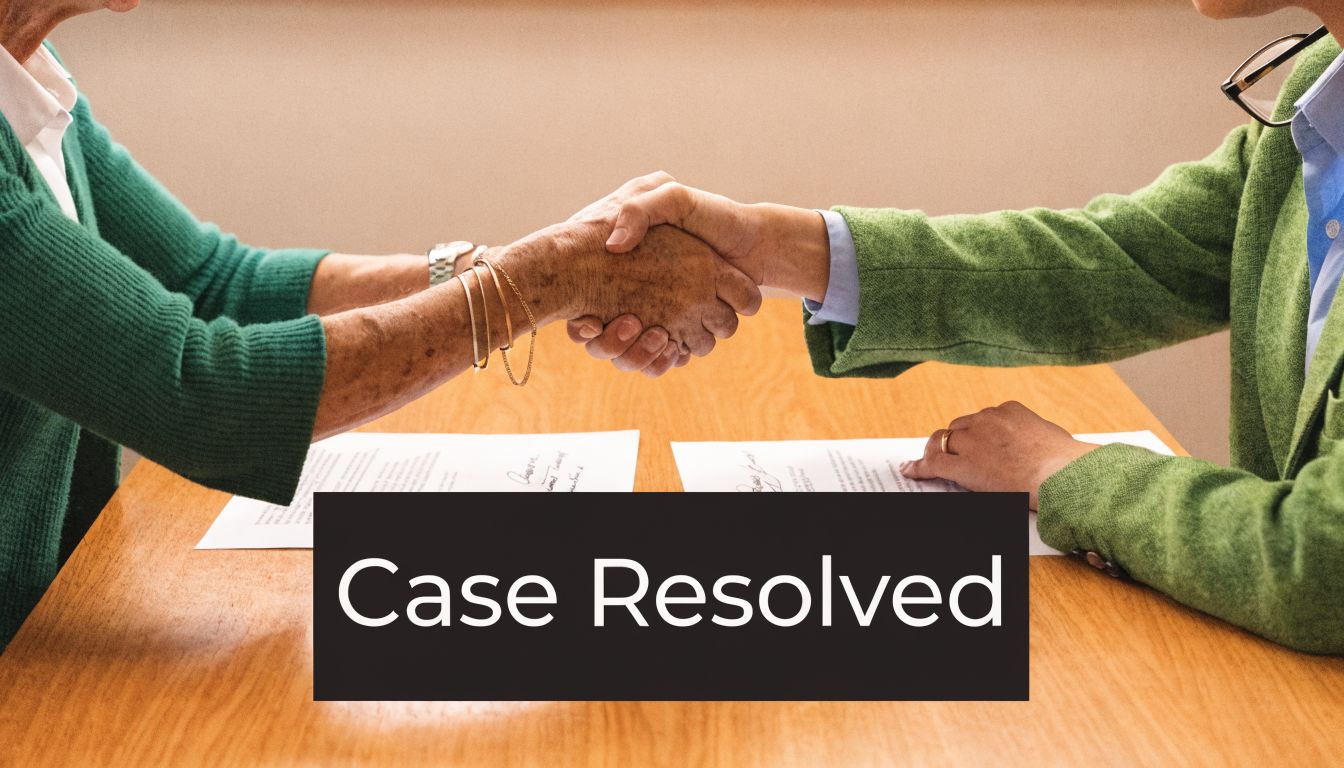
The clouded title on an inherited home
The problem: A parent dies owning a home. One child wants to sell it, but title records and prior transfers aren't clear, and the family can't tell what authority exists.
The strategy: Start with probate authority and a title-focused review. Confirm whether the house belongs in the probate estate, identify any deed issues, and decide whether the property can be transferred or sold cleanly.
The resolution: Once authority and title are aligned, the family can make a real decision instead of arguing in the dark.
The surprise creditor claim
The problem: An estate receives a demand letter for an old debt. The representative worries that ignoring it is dangerous but paying it may be a mistake.
The strategy: Review the claim, the supporting documents, and the estate's status. Separate valid obligations from pressure tactics, then respond in a way that protects the estate process.
The resolution: The representative avoids paying a claim blindly and preserves estate assets for proper administration.
Resolving sibling disagreements
The problem: Two siblings want to distribute property quickly. A third says their parent promised a different arrangement and refuses to cooperate.
The strategy: Lock down authority, preserve the estate, and move discussions from family accusation to legal categories. What is documented, what is provable, and what does California law require?
The resolution: Some disputes settle once the legal ground rules are clear. Others require court intervention. Either way, structure replaces chaos.
Frequently Asked Questions About California Probate
A family often calls after weeks of trying to sort things out on its own. Then they find a deed problem, a sibling dispute, or a will that does not answer the essential question. That is usually the point where probate stops feeling administrative and starts affecting the house, the money, and the family relationship.
Can I handle probate myself in California
Sometimes. A straightforward estate with cooperative heirs, clear assets, and no real property issues may be manageable without full representation.
The risk is misjudging what looks simple at the start. I regularly see estates get stuck because a home was titled incorrectly, a petition was filed with missing information, or a relative objects after the case is already underway. If the estate includes Orange County or Los Angeles real estate, the probate question and the title question usually need to be evaluated together.
What if my loved one died without a will
California law provides a process even without a will. The estate generally passes under intestate succession, and the court can appoint an administrator to collect assets, deal with debts, and distribute what remains to the legal heirs.
That sounds simple on paper. In practice, no-will cases create more room for conflict about who inherits, who should serve, and whether a house can be sold or transferred. Early legal review helps answer those issues before family positions harden.
How long does probate take
It depends on the estate and on the problems attached to it. A well-documented, uncontested estate can move steadily through the court process. Cases involving property sales, creditor claims, missing documents, or will contests take longer because each issue has its own procedure and timing.
Delay usually comes from one of three places. Unclear authority, incomplete records, or conflict among heirs.
Does every estate need a probate lawyer
No. Some families need limited help, such as preparing the initial petition, reviewing whether a small-estate option applies, or resolving a title issue tied to inherited property. Other estates need counsel from the outset because someone is challenging the will, blocking a sale, or disputing who owns a major asset.
That distinction matters. A probate attorney who also handles real estate disputes can often address the issue causing the delay instead of treating probate and property as separate problems.
What should I bring to the first meeting
Bring what you have, not what you wish you had. The most useful documents are the death certificate, the original will, any trust papers, deeds, mortgage statements, recent financial statements, and any letters from creditors or family members raising objections.
If records are incomplete, that is still workable. The first meeting should identify what must be filed, what authority is needed, whether probate is required at all, and whether a related property or contest issue needs immediate attention.