What Is a Beneficiary Deed and How It Works in California
A beneficiary deed, called a revocable transfer on death deed in California, is a recorded document that sends real property to a named person only at the owner's death. It keeps the owner in control during life, and it can move one piece of property outside probate while the rest of the estate still follows the usual plan.
A lot of Orange County families start looking at this tool when they want the house to go to children without adding delays, court steps, or extra stress later. The idea is simple, but the details matter, especially in California where the form, recording rules, and family dynamics can make the difference between a clean transfer and a future dispute.
Table of Contents
- Understanding the California Revocable Transfer on Death Deed
- How the Deed Works Under California Law
- Comparing Beneficiary Deeds to Wills Trusts and Joint Tenancy
- Creating and Recording Your Deed in California
- Litigation Risks and Family Disputes to Consider
- Revoking or Changing Your Beneficiary Deed
- Deciding If a Beneficiary Deed Is Right for Your Family
Understanding the California Revocable Transfer on Death Deed
An Orange County homeowner may want one clear result, the house should pass to children without dragging that one asset through probate. California's answer is the revocable transfer on death deed, the state's version of a beneficiary deed for real property.

The basic idea
The owner signs and records the deed during life, but the deed does not give the beneficiary ownership right away. Cornell describes beneficiary deeds as a nonprobate transfer tool that becomes effective at death, and the transfer remains subject to lifetime encumbrances (Cornell Law). In practical terms, it works like a sealed instruction for one parcel of property, it sits in the record until death, then takes effect for the named property.
California uses the term revocable transfer on death deed, and the statute says it transfers a property interest at death if it is properly executed and recorded (California Probate Code summary). The owner keeps full control while alive, so this is not the same thing as adding someone to title today or giving away the house now.
Practical rule: if you still want to sell, refinance, lease, or change your mind later, a properly handled TOD deed keeps those options open.
What this tool is good for
A beneficiary deed is best understood as an asset-specific probate avoidance tool. It can help one parcel pass directly to the named beneficiary, while the rest of the estate is handled through a will, trust, or probate administration if needed. That makes it useful when the family wants a lower-friction transfer of a residence or a single parcel of land, not a complete estate plan.
The limits matter just as much. This deed only works cleanly if the property, the family structure, and the title history fit the California rules. Debt on the house can affect the result, and a blended family can create claims that are harder to sort out later. Late-life signing also deserves close scrutiny, especially if a caregiver, relative, or neighbor was involved in the decision. Those facts can turn a simple transfer form into a family dispute.
How the Deed Works Under California Law
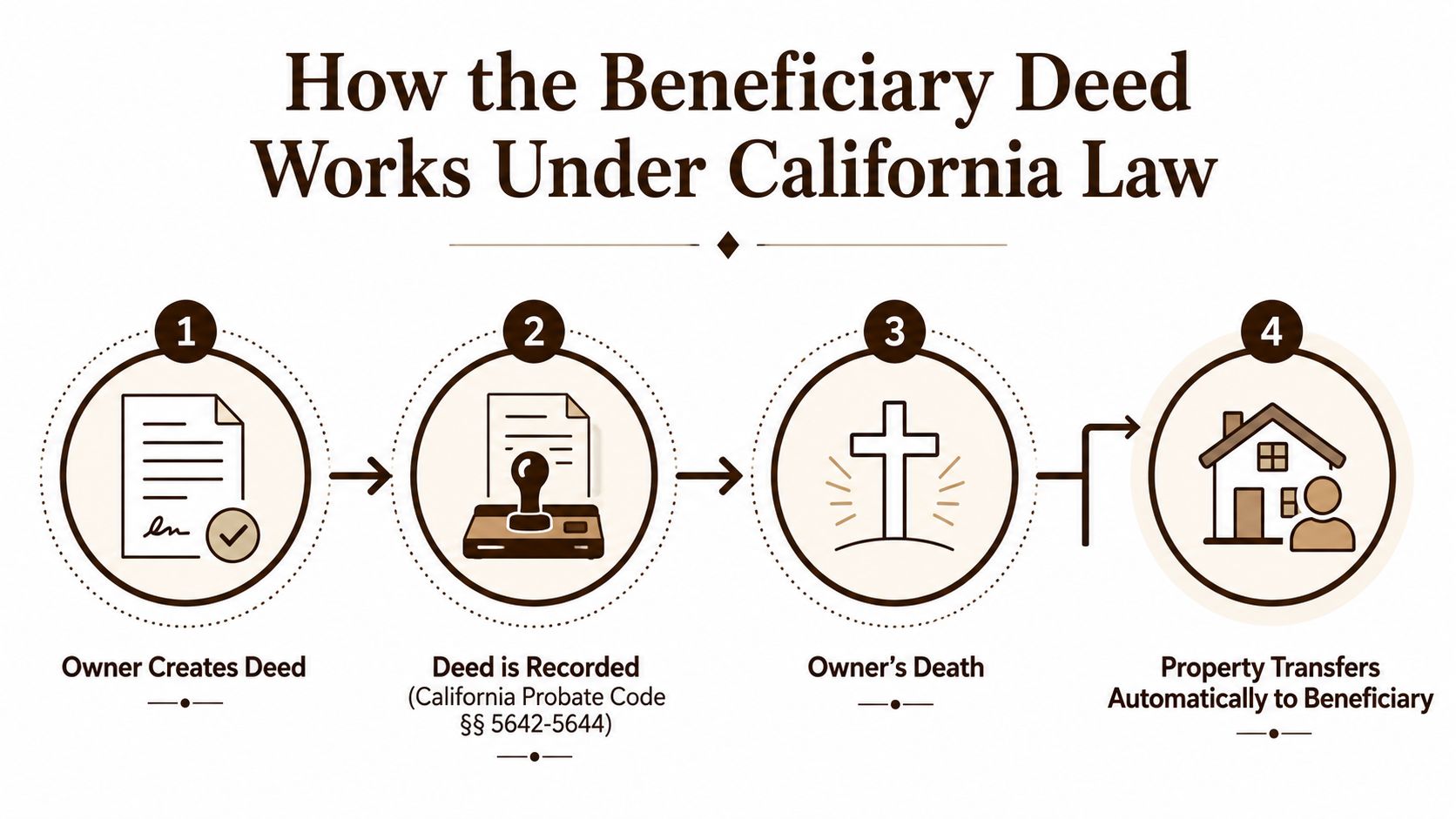
A California revocable transfer on death deed follows a straightforward life cycle. The owner signs it, records it, and keeps full control during life. If the statutory steps were followed, the named beneficiary takes the property at death outside probate for that asset. That is the basic structure California uses for this deed (Sacramento County Law Library summary of California Probate Code §§ 5642–5644).
Recording is what makes it work
California Probate Code §§ 5642 through 5644 require the deed to be recorded before the transferor's death. If it is not on record in time, the deed will not operate the way the owner intended. That is why these deeds are unforgiving when people try to handle them casually.
The property description also has to be accurate. A street address by itself is not the same thing as a proper legal description, and a mistake at that stage can derail the transfer. Homeowners should treat the recording step as a title issue, not just a paperwork issue.
Late-life signing deserves close attention too. If a caregiver, relative, or neighbor was involved in the decision, the risk is not only a drafting mistake, it is also a later fight over undue influence or pressure. Those facts can turn a simple transfer form into contested litigation.
What the Beneficiary Gets
The beneficiary takes the property subject to existing liens, mortgages, deeds of trust, and other encumbrances under Arizona's similar statute and Cornell's description of beneficiary deeds (Arizona statute summary, Cornell Law). In plain English, the beneficiary gets the property as-is, not free and clear. A TOD deed helps avoid probate, but it does not erase debt.
That distinction matters in real life. If the house has a mortgage or another encumbrance, the beneficiary inherits that title position with the property. The deed can still be useful, but it does not solve creditor or payoff issues by itself.
What it does not do
The deed does not change ownership during life, and it does not stop the owner from selling or refinancing. It can also name successor beneficiaries, which matters if the first beneficiary dies before the owner (LTGC overview). In practice, the document works like a contingent title instruction, not a present transfer.
A beneficiary deed is a narrow tool. It controls one property interest at death, but it does not replace the larger work of coordinating a full estate plan.
Comparing Beneficiary Deeds to Wills Trusts and Joint Tenancy
Families often compare four tools when they're trying to keep a California home out of probate, a beneficiary deed, a will, a revocable living trust, and joint tenancy with right of survivorship. The right choice depends on how much flexibility the owner wants, how complicated the family is, and whether the goal is just probate avoidance for one parcel or broader planning.
| Feature | Beneficiary Deed | Will | Living Trust | Joint Tenancy |
|---|---|---|---|---|
| Probate avoidance for the house | Yes, for the recorded property only | No, the property usually passes through probate | Yes, if the property is titled in the trust | Yes, but only if title is set up correctly |
| Control during life | Full control stays with the owner | Full control stays with the owner | Full control usually stays with the owner as trustee | Shared ownership can limit flexibility |
| Can be changed during life | Yes, by revocation or later deed | Yes, by new will or codicil | Yes, by trust amendment | No, not as freely once another owner is added |
| Good for blended families | Sometimes, but riskier | Sometimes, depending on drafting | Often better for coordination | Usually awkward |
| Handles multiple assets well | Not really | Better than a deed for direction, but still probate-based | Yes, best for coordinated planning | No, it only covers jointly owned property |
Where the deed fits
A beneficiary deed is usually the cleanest fit when the goal is simple. One house, one clear beneficiary, and a desire to avoid probate for that specific property can make the deed a reasonable option. It's also useful when the owner wants to keep full lifetime control and doesn't want to retitle the property into a trust.
Where it starts to break down
A will handles more than real estate, but it generally doesn't avoid probate. A living trust is usually better when there are multiple assets, minor children, special needs planning, or a need to coordinate a whole estate. Joint tenancy can avoid probate, but it also creates shared ownership while the owner is alive, which can make the property harder to manage and can create unintended consequences.
A simple way to think about it is this. If the question is only, “Who should get this one house at death?”, the deed may work. If the question is, “How do we coordinate the whole family's inheritance, debts, and contingencies?”, the trust is usually the more complete tool.
Practical rule: the more moving parts your family has, the less a single deed solves by itself.
Creating and Recording Your Deed in California
A California transfer-on-death deed only works if the paperwork is done with care. The owner has to use the correct statutory form, include a precise legal description, sign it properly, and record it with the county recorder before death. Miss one of those steps, and the family may discover that the deed does not transfer the property the way they expected.

The checklist that matters
- Use the statutory form. California requires the deed to follow the state's transfer-on-death deed rules.
- Include the legal description of the property. A street address is not enough. The deed needs the recorded legal description.
- Identify the beneficiary clearly. The document must name who receives the property.
- Sign before a notary. Proper notarization is part of the execution process.
- Record it before death. Recording during the owner's lifetime is required, and the Sacramento County Law Library summary of California Probate Code §§ 5642–5644 explains those rules in more detail (Sacramento County Law Library summary of California Probate Code §§ 5642–5644).
Common mistakes that cause trouble
The biggest mistake is waiting too long to record the deed. If the owner dies before the deed is properly recorded, the transfer will not work as planned. Another common error is using the wrong legal description, especially when a homeowner copies only the street address instead of the exact deed language from the recorded title documents.
California's revocable transfer on death deed rules are narrow, so exact wording matters. Families also run into trouble when they assume a relative can fix the paperwork later. That usually does not happen. If the deed is not signed and recorded correctly while the owner is alive, the intended transfer may fail.
In practice, this is not a form to treat casually. A clean recording now can prevent a title issue, a probate problem, or a family dispute later. This is also where late-life pressure can matter. If a beneficiary deed is signed when an older owner is isolated, dependent on a caregiver, or being steered by one family member, the document can become the starting point for a later challenge over whether the transfer was voluntary.
Litigation Risks and Family Disputes to Consider
A beneficiary deed can be challenged. That surprises a lot of families, because the document feels straightforward and looks less dramatic than a trust dispute. But California families, especially in Orange County and Los Angeles, should understand that a deed signed under pressure can become the center of a later fight.
Arizona-focused legal commentary identifies fraud, duress, mistake, and undue influence as grounds for attack, and it points to classic warning signs like hasty execution, concealment, active beneficiary involvement, and a confidential relationship such as caregiver dependence (elder-law.com beneficiary deed challenge analysis). Those are not theoretical concerns. They are the exact fact patterns that make family members suspicious after the owner is gone.
Why caregiver situations raise alarms
Late-life deeds are often the most vulnerable. If a caregiver helps arrange the signing, stays closely involved in the process, or appears to benefit from the transfer while the owner is isolated, the family may question whether the owner acted freely. The same risk appears when one child manages appointments, transportation, finances, or access to the home while another child is left out.
Blended families are another pressure point. A deed that names one child, one spouse, or one side of the family can trigger disputes if the rest of the family expected a different result. The deed may have been legally valid and still become emotionally explosive.
What makes these disputes harder
Unlike a full estate plan done with counsel, a deed often leaves a thinner paper trail. That doesn't make it invalid, but it can make it harder to defend if someone later claims the owner was pressured or confused. The Arizona commentary is useful here because it highlights a real gap in many online guides, they focus on probate avoidance and ignore the litigation side of the story.
The candid answer is simple. A beneficiary deed can sometimes reduce friction, but it can also increase conflict if it's executed late in life, without advice, or in the shadow of dependency. The risk rises when the facts look like the classic undue influence pattern, not when the family is calm and everyone understands the plan.
A deed signed in a hospital room, a caregiver's home, or after a sudden family conflict deserves more scrutiny than a deed signed as part of careful planning.
Revoking or Changing Your Beneficiary Deed
California homeowners keep control after recording a transfer-on-death deed, and that includes the power to change course. The owner can revoke the deed, record a new one that replaces the old one, or sell the property, which effectively ends the old transfer instruction for that parcel.
How changes usually happen
The most direct method is a recorded revocation. Another is a later deed that supersedes the earlier one, as long as the new document is properly executed and recorded. Sale of the property also changes the equation, because the original deed only controls the property that was covered.
That flexibility is one reason families like the tool. Life changes, and estate plans should be able to change with them. A divorce, remarriage, death of a beneficiary, or a new child can all justify a fresh look at the title documents.
Why recordkeeping matters
The problem is not just whether the owner can change the deed. The problem is whether everyone knows what the current version is. Old recorded deeds can stay in the public record, so families need to keep the paperwork organized and the plan updated after major events.
A homeowner should also check whether the rest of the estate plan still matches the deed. If the deed says one thing and the will or trust says another, the family may end up sorting out avoidable confusion later. That's especially true when the owner has moved, refinanced, or inherited new property since the original deed was recorded.
The safest approach is to review the deed any time there's a major family or property change, not only when a dispute is already brewing.
Deciding If a Beneficiary Deed Is Right for Your Family
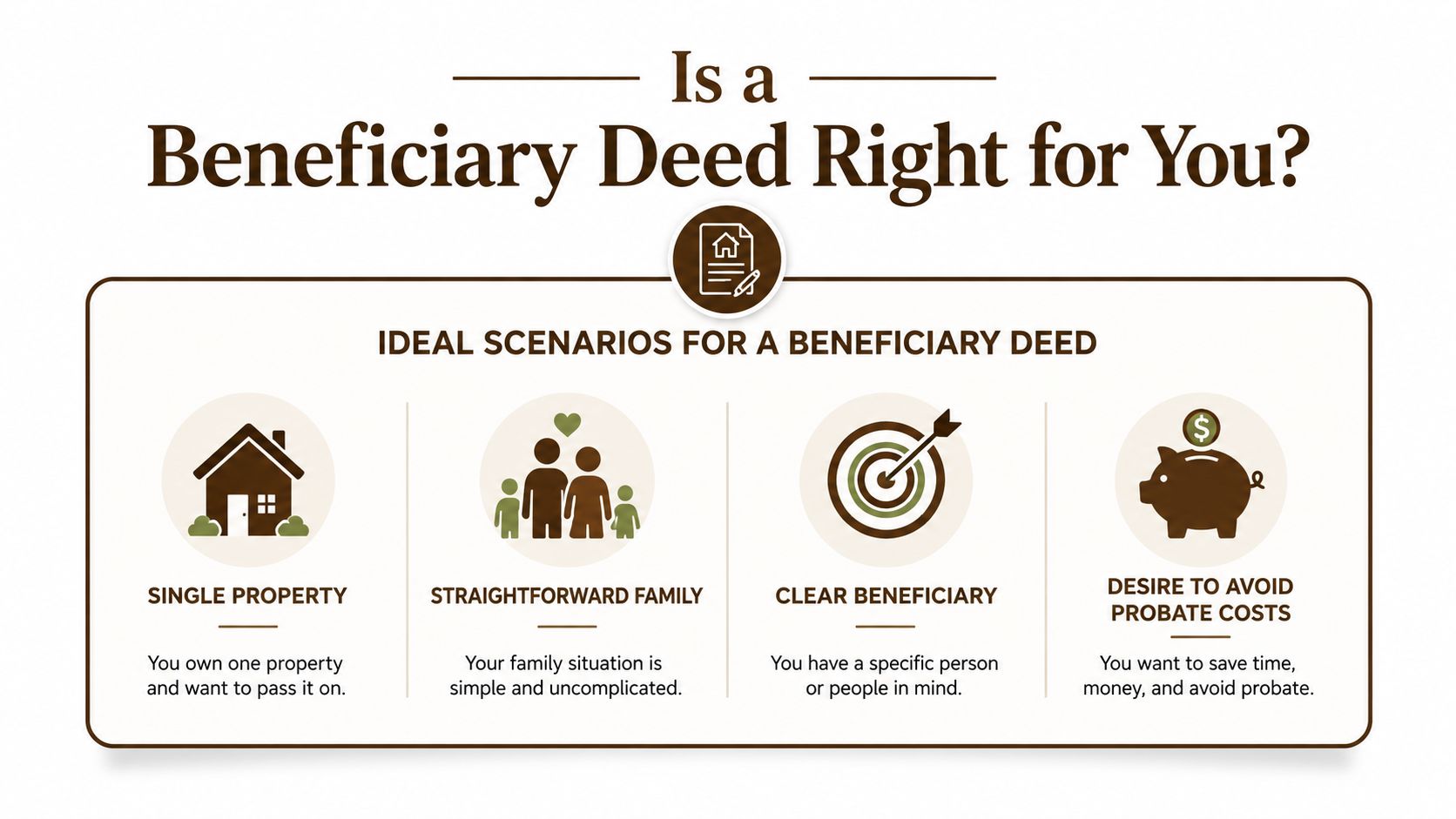
A beneficiary deed works best when the plan is narrow and clear. It can be a sensible choice for a single property, a straightforward family, a clear beneficiary, and a homeowner who wants to avoid probate costs for that one asset.
A good fit looks like this
- Single Property. The deed is designed for a specific parcel, not a whole estate.
- Straightforward Family. Fewer moving parts usually means fewer chances for conflict.
- Clear Beneficiary. The fewer questions about who gets the property, the better the fit.
- Desire to Avoid Probate Costs. The deed can keep one property out of probate if the California formalities are followed.
A beneficiary deed is not a substitute for broader estate planning. It doesn't solve every creditor problem, it doesn't automatically handle minors or special needs issues, and it doesn't fit every blended family. For many California households, the core question is not whether the deed works in theory, but whether it works cleanly in the family's actual facts.
The bottom line
Use the deed when the goal is narrow and the title picture is clean. Look harder at a trust or a more complete plan when the estate includes multiple assets, complicated family relationships, or a real chance of later dispute. In California, the wrong document is worse than no document if it leaves the family with a title problem or litigation risk.
If you're deciding whether a beneficiary deed makes sense for your home in Orange County or Los Angeles, Tanner Law can help you sort through the title issues, probate concerns, and family dynamics before you sign anything. Visit Tanner Law to schedule a free consultation and get practical guidance for your situation.